

Understanding the human brain clock & related neuroscience
Wednesday, March 28, 2018


Tuesday, March 27, 2018
Do brain exercises work? | Popular Science

https://www.popsci.com/do-brain-exercises-work
******************************************************
Kevin McGrew, PhD
Educational Psychologist
Director, Institute for Applied Psychometrics
IAP
www.themindhub.com
******************************************************
Monday, March 26, 2018
European Journal of Neuroscience: Vol 47, No 6
European Journal of Neuroscience: Vol 47, No 6
A new view of social‐cognitive neurodevelopment is emerging from imaging studies of joint attention. Theory and these studies suggest that the cortical…
Read it on Flipboard
Read it on onlinelibrary.wiley.com
Saturday, March 17, 2018
The importance of differential psychology for school learning: 90% of school achievement variance is due to student characteristics
This is why the study of individual differences/differential psychology is so important. If you don’t want to read the article you can watch a video of Dr. Detterman where he summarizes his thinking and this paper.
Education and Intelligence: Pity the Poor Teacher because Student Characteristics are more Significant than Teachers or Schools. Article link.
Douglas K. Detterman
Case Western Reserve University (USA)
Abstract
Education has not changed from the beginning of recorded history. The problem is that focus has been on schools and teachers and not students. Here is a simple thought experiment with two conditions: 1) 50 teachers are assigned by their teaching quality to randomly composed classes of 20 students, 2) 50 classes of 20 each are composed by selecting the most able students to fill each class in order and teachers are assigned randomly to classes. In condition 1, teaching ability of each teacher and in condition 2, mean ability level of students in each class is correlated with average gain over the course of instruction. Educational gain will be best predicted by student abilities (up to r = 0.95) and much less by teachers' skill (up to r = 0.32). I argue that seemingly immutable education will not change until we fully understand students and particularly human intelligence. Over the last 50 years in developed countries, evidence has accumulated that only about 10% of school achievement can be attributed to schools and teachers while the remaining 90% is due to characteristics associated with students. Teachers account for from 1% to 7% of total variance at every level of education. For students, intelligence accounts for much of the 90% of variance associated with learning gains. This evidence is reviewed
- Posted using BlogPress from my iPad
Each Cell Has A Clock
Each Cell Has A Clock
For many years there was a consensus that most organisms have a circadian clock. In humans it was considered to be directed centrally by the master clock in the brain region…
Read it on Flipboard
Read it on jonlieffmd.com
Why the Brain-Body Connection Is More Important Than We Think
Why the Brain-Body Connection Is More Important Than We Think
From Brain, a Flipboard magazine by Kurt Martinson
Our brains aren't flying solo; our emotions also come into play when we're interacting with the world, new research finds. The idea that…
Read it on Flipboard
Read it on news.nationalgeographic.com
Tuesday, March 13, 2018
NSF Funding Available for Research on Augmenting Human Cognition and Intelligent Cognitive Assistants

NSF Funding Available for Research on Augmenting Human Cognition and Intelligent Cognitive Assistants
From The Brain, a Flipboard topic
In 2016, the US National Science Foundation (NSF) released a set of 10 "Big Ideas" reflecting…
Read it on Flipboard
Read it on psychologicalscience.org
Monday, March 12, 2018
CHC intelligence theory update: Live chat or later YouTube viewing from #pscyhedpodcast this Sunday evening
I am looking forward to talking about the Cattell-Horn-Carroll (CHC) model of intelligence on the #psychedpodcast this sunday evening.
I will present material largely based on the forthcoming CHC chapter coauthored with Dr. Joel Schneider. Tune it....it shall be fun. Or, watch the discussion later on YouTube, and eventually as an audio podcast on iTunes

I will present material largely based on the forthcoming CHC chapter coauthored with Dr. Joel Schneider. Tune it....it shall be fun. Or, watch the discussion later on YouTube, and eventually as an audio podcast on iTunes

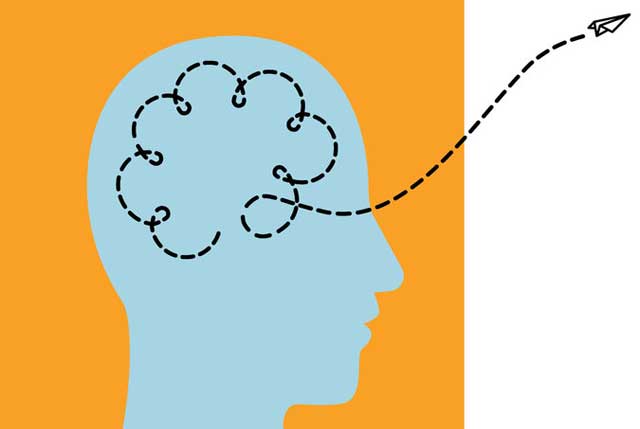
Mind-wandering may help enhance creativity, job performance and general well-being, studies show
----
Mind-wandering may help enhance creativity, job performance and general well-being, studies show
// SharpBrains
 ___
When writing a song or a piece of prose, I often choose to let my mind wander, hoping the muse will strike. If it does, it not only moves my work along but feels great, too!
That's why I was troubled by studies that found an association between mind-wandering and problems like unhappiness and depression—and even a shorter life expectancy. This research suggests that focusing one's thoughts on the present moment is linked to well-being, while spacing out—which I personally love to do—is not.
Now, new studies are bringing nuance to this science. Whether or not mind-wandering is a negative depends on a lot of factors—like whether it's purposeful or spontaneous, the content of your musings, and what kind of mood you are in. In some cases, a wandering mind can lead to creativity, better moods, greater productivity, and more concrete goals.
Here is what some recent research says about the upsides of a meandering mind.
Mind-wandering can make you more creative
It's probably not a big surprise that mind-wandering augments creativity—particularly "divergent thinking," or being able to come up with novel ideas.
In one study, researchers gave participants a creativity test called the Unusual Uses Task that asks you to dream up novel uses for an everyday item, like a paperclip or a newspaper. Between the first and second stages, participants either engaged in an undemanding task to encourage mind-wandering or a demanding task that took all of their concentration; or they were given a resting period or no rest. Those participants who engaged in mind-wandering during the undemanding task improved their performance much more than any of the other groups. Taking their focus off of the task and mind-wandering, instead, were critical to success.
"The findings reported here provide arguably the most direct evidence to date that conditions that favor mind-wandering also enhance creativity," write the authors. In fact, they add, mind-wandering may "serve as a foundation for creative inspiration."
As a more recent study found, mind-wandering improved people's creativity above and beyond the positive effects of their reading ability or fluid intelligence, the general ability to solve problems or puzzles.
Mind-wandering seems to involve the default network of the brain, which is known to be active when we are not engaged directly in tasks and is also related to creativity.
So perhaps I'm right to let my focus wander while writing: It helps my mind put together information in novel and potentially compelling ways without my realizing it. It's no wonder that my best inspirations seem to come when I'm in the shower or hiking for miles on end.
Mind-wandering can make you happier…depending on the content
The relationship between mind-wandering and mood may be more complicated than we thought.
In one study, researchers pinged participants on a regular basis to see what they were doing, whether or not their minds were wandering, and how they were feeling. As in an earlier experiment, people tended to be in a negative mood when they were mind-wandering. But when researchers examined the content of people's thoughts during mind-wandering, they found an interesting caveat: If participants' minds were engaged in interesting, off-task musings, their moods became more positive rather than more negative.
As the authors conclude, "Those of us who regularly find our minds in the clouds—musing about the topics that most engage us—can take solace in knowing that at least this form of mind-wandering is associated with elevated mood."
It may be that mood affects mind-wandering more than the other way around. In a similar study, researchers concluded that feeling sad or being in a bad mood tended to lead to unhappy mind-wandering, but that mind-wandering itself didn't lead to later bad moods. Earlier experiments may have conflated mind-wandering with rumination—an unhealthy preoccupation with past failures that is tied to depression.
"This study suggests that mind-wandering is not something that is inherently bad for our happiness," write the authors. Instead, "Sadness is likely to lead the mind to wander and that mind-wandering is likely to be [emotionally] negative."
A review of the research on mind-wandering came to a similar conclusion: Mind-wandering is distinct from rumination and therefore has a different relationship to mood.
Can we actually direct our mind-wandering toward more positive thoughts and away from rumination? It turns out that we can! One study found that people who engaged in compassion-focused meditation practices had more positive mind-wandering. As an added bonus, people with more positive mind-wandering were also more caring toward themselves and others, which itself is tied to happiness.
Mind-wandering may improve job performance
Taking a break from work can be a good thing—perhaps because our minds are freer to wander.
Mind-wandering is particularly useful when work is mind-numbing. In one study, participants reported on their mind-wandering during a repetitive task. Participants who engaged in more mind-wandering performed better and faster, decreasing their response times significantly. The researchers speculated that mind-wandering allowed people to go off-task briefly, reset, and see data with fresh eyes—so that they didn't miss sudden changes.
In another study, researchers aimed to figure out what parts of the brain were implicated in mind-wandering and discovered something unexpected. When their frontal lobes were stimulated with a small electrical current to boost mind-wandering, people's performance on an attention task slightly improved.
Of course, not every job calls for mind-wandering. A surgeon or a driver should stay focused on the task at hand, since mind-wandering could be detrimental to both. On the other hand, even for them it might be rejuvenating to take a mind-wandering break after their workday is over, leading to more focused attention the next time around.
Mind-wandering may help us with goal-setting
It seems like mind-wandering would be detrimental when it comes to planning for the future. In fact, some research suggests mind-wandering can improve goal-setting.
In a recent neuroscience experiment, participants did an undemanding task and reported on the content of their thoughts as researchers scanned their brains with fMRI. Afterwards, they wrote for 15 minutes about personal goals or TV programs (the control group). Then, they repeated these two tasks—the undemanding one and writing about goals or TV.
Analyzers unaware of the study's purpose were asked to assess the concreteness of participants' goal-setting and TV program descriptions. The result? People with wandering minds—who probably started musing about what they really wanted in life after the first writing session—ultimately came up with more concrete and higher-quality goal descriptions in the second session. Over the course of the experiment, their brains also showed an increase in connectivity between the hippocampus and the pre-frontal cortex—areas implicated in goal-setting.
Research has also found that, the more people engage in mind-wandering during a task, the more they are willing to wait for a reward afterwards. According to the researchers, this suggests that mind-wandering helps delay gratification and "engages processes associated with the successful management of long-term goals."
On the other hand, some research suggests mind-wandering makes us less "gritty"—or less able to stay focused on our goals to completion—especially if it is spontaneous rather than deliberate. So, it may be important to consider where you are in the process of goal creation before deciding mind-wandering would be a good idea.
None of this suggests that mind-wandering is better for us than being focused. More likely, both aspects of cognition serve a purpose. Under the right circumstances, a wandering mind may actually benefit us and possibly those around us. The trick is to know when to set your mind free.

Related articles:
- New book on how to practice mindfulness meditation with humor and playfulness
- Study: Mindful meditation works. Now, how to navigate the most popular options?
- Six tips to build resilience and prevent brain-damaging stress
----
Read in my feedly
Friday, March 02, 2018
BB (blatant brag): McGrew CHC 2009 article in Intelligence #1 (2008-2015) and top #10 all time

This was a pleasant surprise. I knew my 2009 Intelligence article was cited frequently but I never knew it was number one from 2008-2015 and it made the top 10 all time list for the journal Intelligence. I believe this is a reflection of the impact the CHC taxonomy has had. This should make my mom proud. Here is a link to the original article.
Bibliometric analysis across eight years 2008–2015 of Intelligence articles: An updating of Wicherts (2009). Article link.
Bryan J. Pesta
Abstract
I update and expand upon Wicherts' (2009) editorial in Intelligence. He reported citation counts of papers pub-lished in this journal from 1977 to 2007. All these papers are now at least a decade old, and many more new articles have been published since Wichert's analysis. An updated study is needed to help (1) quantify the journal's more recent impact on the scientific study of intelligence, and (2) alert researchers and educators to highly-cited articles; especially newer ones. Thus, I conducted a bibliometric analysis of all articles published here from 2008 to 2015. Data sources included both the Web of Science (WOS), and Google Scholar (GS). The eight-year set comprised 619 articles, published by 1897 authors. The average article had 17.0 (WOS), and 32.9 (GS) citations overall (2.75, and 5.33 citations per year, respectively). These metrics compare favorably with those from other psychology journals. In addition, a list of the most prolific authors is provided. Also reported is a list showing many articles in this set with counts greater than one hundred, and an updated top 25 list for the history of this journal.
“Also noteworthy is that nine of the articles in the old list (not shown here) dropped off the new list. Of their replacements, only three of the nine were published within the last decade: Deary, Strand, Smith, and Fernandes (2007); McGrew (2009), and Strenze (2007). The McGrew (2009) paper is again notable. It is the only article in my newer set (2008–2015) to make the all-time list. The paper ranks ninth on the all-time list with 281 citations, just eight years after being published.”
More recent Google Scholar citation info indicates that the article is still going strong from 2016-2017.

Click on images to enlarge.


- Posted using BlogPress from my iPad
Monday, February 26, 2018
The 50 Most Influential Living Psychologists in the World
I guess I need to work harder.....jk 😀
The 50 Most Influential Living Psychologists in the World
The word "psychology" literally means the study of the soul (psukhē, in Greek). As such, it is an academic discipline that is unique in the…
Read it on Flipboard
Read it on thebestschools.org
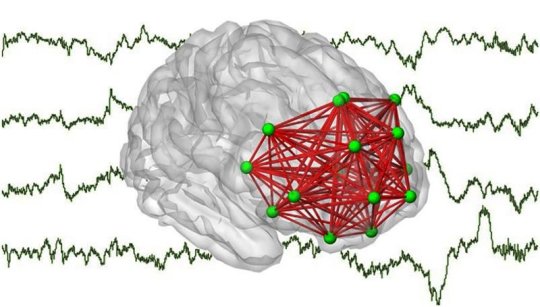
Preterm birth leaves its mark in the functional networks of the brain
Damage is in the most important brain network for higher cognition

Preterm birth leaves its mark in the functional networks of the brain
Researcher have demonstrated that premature birth has a significant and, at the same time, a very selective effect on the…
Read it on Flipboard
Read it on sciencedaily.com
Wednesday, February 21, 2018
Your ability to focus has probably peaked: Here’s how to stay sharp

Your ability to focus has probably peaked: Here's how to stay sharp
From Brain, a Flipboard magazine by Jordanna Manor
Having a hard time focusing lately? You're not alone. Research shows interruptions occur about every twelve minutes in the workplace…
Read it on Flipboard
Read it on theladders.com
******************************************************
Kevin McGrew, PhD
Educational Psychologist
Director, Institute for Applied Psychometrics
IAP
******************************************************
Tuesday, February 20, 2018
The Five Secrets of Brain Health
Dr. Lieff is an excellent thinker and writer worth following
The Five Secrets of Brain Health
The brain is a 3-pound organ in our body, which, like any other organ, can be healthy or unhealthy. Uniquely, the brain is intertwined with our mind, emotions,…
Read it on Flipboard
Read it on jonlieffmd.com
Sunday, February 18, 2018
BrainFacts2

BrainFacts2
From Twitter, a Flipboard magazine by BrainFacts.org
Thinking, Sensing & Behaving Diseases & Disorders BrainFacts/SfN • 4 min BrainFacts/SfN • 5 min Brain Anatomy & Function BrainFacts/SfN BrainFacts/SfN Neuroscience in Society
Read it on Flipboard
Read it on brainfacts.org
Sunday, February 11, 2018
Closing the achievement gap the intelligent way | THE Opinion

******************************************************
Kevin McGrew, PhD
Educational Psychologist
Director, Institute for Applied Psychometrics
IAP
www.themindhub.com
******************************************************
Sunday, January 28, 2018
How does your brain follow music?

******************************************************
Kevin McGrew, PhD
Educational Psychologist
Director, Institute for Applied Psychometrics
IAP
www.themindhub.com
******************************************************
Time Cells Organize Memory
Time Cells Organize Memory
Yesterday, When I woke up I washed and dressed And while drinking coffee, The telephone rang, And you invited me to the meeting. Memories have specific sequences of events.…
Read it on Flipboard
Read it on jonlieffmd.com
Wednesday, January 24, 2018
Neuroscientists Finally Put The Dubious Claims of 'Phrenology' to The Test

Neuroscientists Finally Put The Dubious Claims of 'Phrenology' to The Test
From Neurociencia, a Flipboard magazine by igaea
Nobody really believes that the shape of our heads are a window into our personalities anymore. This idea, known as…
Read it on Flipboard
Read it on scienceaf.com
******************************************************
Kevin McGrew, PhD
Educational Psychologist
Director, Institute for Applied Psychometrics
IAP
******************************************************
Monday, January 22, 2018
Intelligence in the Brain: Conversation With Neuroscientist Rogier Kievit
Excellent thoughts from and excellent researcher interviewed by an excellent psychologist and thought leader.

Intelligence in the Brain: Conversation With Neuroscientist Rogier Kievit
Neuroscientist Rogier Kievit discusses the neuroscience of intelligence.
Read it on Flipboard
Read it on psychologytoday.com
Sunday, January 21, 2018
Creative people have better-connected brains, research finds
I have previously posted an FYI about this research. This summary by Jon Lieff is excellent.

Creative people have better-connected brains, research finds
From Twitter, a Flipboard magazine by Jon Lieff MD
Seemingly countless self-help books and seminars tell you to tap into the right side of your brain to stimulate creativity. But forget the…
Read it on Flipboard
Read it on medicalxpress.com
Thursday, January 18, 2018
General, crystallized and fluid intelligence are not associated with functional global network efficiency: A replication study with the human conne... - PubMed

General, crystallized and fluid intelligence are not associated with functional global network efficiency: A replication study with the human conne... - PubMed
Read it on Flipboard
Read it on ncbi.nlm.nih.gov
Tuesday, January 16, 2018
Myelin Facilitation of Whole Brain Neuroplasticity
An excellent summary article
Myelin Facilitation of Whole Brain Neuroplasticity
Neuroplasticty is the way a brain makes lasting alterations of its own circuits when responding to experience. A vast array of mechanisms have been…
Read it on Flipboard
Read it on jonlieffmd.com
Creative thinkers' brains show signature pattern of neural connectivity, new study finds

Creative thinkers' brains show signature pattern of neural connectivity, new study finds
From Science and Health, a Flipboard magazine by IBTimes UK
In case of creative thinkers, researchers noted a better connection between 3 crucial parts of the brain.…
Read it on Flipboard
Read it on ibtimes.co.uk
Saturday, January 13, 2018
How does your body know what time it is? - Marco A. Sotomayor

How does your body know what time it is? - Marco A. Sotomayor
https://ed.ted.com/lessons/how-does-your-body-know-what-time-it-is-marco-a-sotomayor
Sent via Flipboard, your personal magazine.
Get it for free to keep up with the news you care about.
Friday, January 05, 2018
Meta-analysis of action video game impact on perceptual, attentional, and cognitive skills.
Meta-analysis of action video game impact on perceptual, attentional, and cognitive skills.
Citation
Bediou, B., Adams, D. M., Mayer, R. E., Tipton, E., Green, C. S., & Bavelier, D. (2018). Meta-analysis of action video game impact on perceptual, attentional, and cognitive skills. Psychological Bulletin, 144(1), 77-110.
http://dx.doi.org/10.1037/bul0000130Abstract
The ubiquity of video games in today's society has led to significant interest in their impact on the brain and behavior and in the possibility of harnessing games for good. The present meta-analyses focus on one specific game genre that has been of particular interest to the scientific community—action video games, and cover the period 2000–2015. To assess the long-lasting impact of action video game play on various domains of cognition, we first consider cross-sectional studies that inform us about the cognitive profile of habitual action video game players, and document a positive average effect of about half a standard deviation (g = 0.55). We then turn to long-term intervention studies that inform us about the possibility of causally inducing changes in cognition via playing action video games, and show a smaller average effect of a third of a standard deviation (g = 0.34). Because only intervention studies using other commercially available video game genres as controls were included, this latter result highlights the fact that not all games equally impact cognition. Moderator analyses indicated that action video game play robustly enhances the domains of top-down attention and spatial cognition, with encouraging signs for perception. Publication bias remains, however, a threat with average effects in the published literature estimated to be 30% larger than in the full literature. As a result, we encourage the field to conduct larger cohort studies and more intervention studies, especially those with more than 30 hours of training. (PsycINFO Database Record (c) 2018 APA, all rights reserved)
******************************************************
Kevin McGrew, PhD
Educational Psychologist
Director, Institute for Applied Psychometrics
IAP
******************************************************
Monday, January 01, 2018
The Neuroscience of Intelligence: An Interview with Richard Haier

The Neuroscience of Intelligence: An Interview with Richard Haier
Richard Haier is a Professor Emeritus at the University of California Irvine and is the author of the Neuroscience of Intelligence…
Read it on Flipboard
Read it on quillette.com
Thursday, December 28, 2017
Yes, the ADHD Brain Can Be Trained to Improve
Yes, the ADHD Brain Can Be Trained to Improve
From BiPolar, Depression & ADHD, a Flipboard magazine by Rob Waldrip
But can people with attention deficit hyperactivity disorder – often referred to as a brain-based disorder – also train their brain to improve? Every…
Read it on Flipboard
Read it on msn.com
******************************************************
Kevin McGrew, PhD
Educational Psychologist
Director, Institute for Applied Psychometrics
IAP
******************************************************
Wednesday, December 13, 2017
Action video games expand the brain's cognitive abilities
Action video games expand the brain's cognitive abilities
From Mind, a Flipboard magazine by Devon Briggs
The human brain is malleable – it learns and adapts. Numerous research studies have focused on the impact of action video games on the brain…
Read it on Flipboard
Read it on psypost.org
Talking to yourself? Here’s the science behind that little voice in your head

Talking to yourself? Here's the science behind that little voice in your head
The brain considers talking to ourselves in our heads to be very similar to speaking our thoughts out loud. And the…
Read it on Flipboard
Read it on irishexaminer.com
Subscribe to:
Posts (Atom)