Showing posts with label general intelligence (g). Show all posts

Friday, July 31, 2015

Temporal g and the temporal resolution power hypothesis (TRP): An OGB pst


[Double click on image to enlarge]

[This is an OBG post (oldie but goodie post) that was first posted June 29, 2009]

Temporal g...or...the temporal resolution power hypothesis (TRP). Lets hear it for the IQ Brain Clock!

I've previously blogged, with considerable excitement, about recent research that has suggested that the temporal resolution of one's internal "brain clock" may be more closely associated with intelligence scholars search for the neural underpinnings of general intelligence (g). Traditionally, and overwhelmingly, intelligence scholars have studied and focused on mental reaction time, largely based on the seminal work of Arthur Jensen. Then, along came recent research led primarily by mental timing scholar Rammsayer and colleagues...research that suggested that temporal g (vs. reaction time g) may be more important in attempts to identify the underlying mechanism of neural efficiency.. the focus of the search for the "holy grail" of general intelligence for decades.

The following just published journal article continues to add to the evidence that temporal processing, temporal g, and/or temporal resolution, may be critically important in understanding human intellectual performance. Below is the article reference, abstract, and my paraphrased comments from a reading of the article.
  • Troche, S. & Rammsayer, T. (2009). Temporal and non-temporal sensory discrimination and their predictions of capacity-and speed-related aspects of psychometric intelligence. Personality and Individual Differences,47, 52–57

Abstract
The temporal resolution power hypothesis explains individual differences in psychometric intelligence in terms of temporal acuity of the brain. This approach was supported by high correlations between temporal discrimination and psychometric intelligence. Psychometric intelligence, however, was frequently found to be related to non-temporal discrimination (e.g., frequency, intensity, brightness discrimination). The present study investigated 100 female and 100 male participants with the aim to elucidate the functional relations between psychometric intelligence and temporal and non-temporal discrimination ability. Supporting the assumption of dissociable mechanisms, non-temporal discrimination predicted directly capacity – but not speed-related aspects of psychometric intelligence whereas temporal discrimination predicted both aspects. A substantial correlation between temporal and non-temporal discrimination suggested that general discrimination ability might account for the relations of psychometric intelligence to temporal and non-temporal discrimination abilities. Findings point to an internal structure of general discrimination ability with some dimensions of discrimination more predictive to certain aspects of psychometric intelligence than others.
Introduction/background summary

The neural efficiency hypothesis, based on Jensen's model of neuronal oscillations, has stood front and center as the defacto explanation of individual differences in processing speed and psychometric intelligence. This model suggestes that individuals differ in the rate of rate of oscillation between refractory and excitatory states of neurons. The efficiency of oscillation rate, in turn, determines the speed/efficiency of transmission of neurally encoded information. The bottom line is that individuals with higher neural oscillate rates are believed to process information more efficiently, which leads to better intellectual performance.

In contrast, according to the articles authors, the more recent "temporal resolution power (TRP) hypothesis also refers to a hypothetical oscillatory process in the brain to account for the relationship between efficiency and speed of information processing as well as psychometric intelligence (Rammsayer & Brandler, 2002, 2007). According to this view, higher neural temporal resolution leads to faster information processing and to better coordination of mental operations resulting in better performance on intelligence tests. Rammsayer and Brandler (2002) proposed that psychophysical timing tasks, assessing temporal sensitivity and timing accuracy, are the most direct behavioral measures of TRP. The TRP hypothesis has been supported by subsequent studies which found substantial correlations between psychometric intelligence and timing performance (Helmbold, Troche, & Rammsayer, 2006, 2007; Rammsayer & Brandler, 2007)." Most of these studies have been described previously at the IQ Brain Clock blog under the label temporal g.

An important issue for the TRP hypothesis to address is the fact that the most frequently used mental timing tasks also imply some form of simple sensory discrimination (together with the timing component). In order for the TRP hypothesis to have merit, the model must address (explain) the established relation between sensory discrimination and psychometric (tested) intelligence not only for the temporal domain but also for other non-temporal sensory dimensions. As summarized by the author, "associations with psychometric intelligence were shown for color (r = .08 to r = .32; Acton & Schroeder, 2001), pitch (r = .42 to r = .54; Raz, Willerman, & Yama, 1987), or texture and shape in the tactile modality (r = .08 to r = .29; Stankov, Seizova-Cajic´, & Roberts, 2001)."

Purpose of study

The purpose of the current study was to disentangle the relations between temporal processing and sensory discrimination via the evaluation and testing of two different structural models. As described by the authors, "the first model expanded the investigation of Helmbold et al. (2006) to the level of latent variables by factorizing various non-temporal and temporal discrimination tasks. It is assumed that temporal and non-temporal discrimination abilities predict psychometric intelligence as two disocciable factors which, however, can be related to each other. The TRP hypothesis postulates that TRP affects both capacity- and speed-related aspects of psychometric intelligence (Helmbold & Rammsayer, 2006)."

Alternatively "Model 2 proceeds from Spearman’s (1904) assumption that a general discrimination ability predicts psychometric intelligence. In accordance with this view, temporal discrimination constitutes a factor indicsociable from non-temporal discrimination. In other words, temporal and non-temporal discrimination tasks build a common factor referred to as GDA."

Method summary

The subjects were 100 male and 100 female volunteers (18 to 30 years of age; mean ± SD = 22.2 ± 3.3 years). The sample comprised 93 university students, 89 vocational school students and apprentices, while the remaining participants were working individuals of different professions. All participants reported normal hearing and normal or corrected-to-normal sight. The authors employed structural equation modeling (SEM) methods to evaluate and compare the two models.

Capacity and speed components of psychometric IQ (g) were measured with 12 subtests of the Berlin model of intelligence structure (BIS) test (Jäger, Süß, & Beauducel, 1997). Four temporal (temporal generalization, duration, temporal-order judgment, rhythm perception) and three non-temporal sensory discrimination tasks (pitch discrimination, intensity discrimination, rightness discrimination) were used to operationally define temporal processing and sensory discrimination, respectively.


Conclusions/discussion summary (emphasis added by blogmaster)

Evaluation and comparison of the two models suggested the following conclusions (as per the authors)
  • The relation between non-temporal discrimination and speed was completely mediated by temporal discrimination. The association between temporal discrimination and capacity was twofold. There was a weak but reliable direct association as well as a stronger indirect relation mediated by non-temporal discrimination.
  • Although Model 1 revealed a high correlation between temporal and non-temporal discrimination, the different relations of temporal and non-temporal discrimination to speed and capacity suggest that the two factors are disocciable. Our finding of a strong correlational link between temporal discrimination ability and psychometric intelligence is in line with the outcome of previous studies investigating the TRP hypothesis...according to this account, higher TRP entails increased speed and efficiency of information processing resulting in higher scores on both speed- and capacity-related intelligence tests. Thus, our finding that Model 1 fitted the data well is in line with the TRP hypothesis.
  • The present results corroborate Helmbold and Rammsayer’s (2006) finding of a stronger relationship between temporal discrimination ability and capacity compared to speed. On the contrary, shared variance with non-temporal discrimination accounted for the association between capacity and temporal discrimination whereas the direct link between temporal discrimination and capacity was rather weak. Thus, the strong relation between TRP and psychometric intelligence is probably due to the fact that TRP, when measured as a factor derived from temporal discrimination tasks, taps both temporal and unspecific discrimination abilities. From this perspective, time-related aspects of TRP may account for the association to speed whereas rather unspecific discrimination-related aspects mainly account for the association with capacity.
  • The more parsimonious Model 2 should be preferred over Model 1. Model 2 suggests that temporal and non-temporal discrimination tasks constitute a common factor of unspecific, general discrimination performance referred to as GDA. The close association between this factor and psychometric intelligence is supported by the outcome of previous studies.
  • The finding, that both temporal and non-temporal discrimination share a common source, supports the notion that general discrimination ability is somehow associated with higher-order mental ability.
  • The finding of a close association between GDA and psychometric intelligence suggests, that already at a very early sensory stage of information processing, higher neural efficiency can be observed as a correlate of psychometric intelligence
  • The high correlations between GDA and speed- as well as capacity-related aspects of psychometric intelligence, as revealed by Model 2, emphasize the importance of sensory performance as a correlate of higher-order mental ability. Nevertheless, differential relations between temporal and non-temporal discrimination and aspects of psychometric intelligence, as suggested by Model 1, may help to elucidate the internal structure of GDA. This is, certain sensory processes appear to be more predictive for certain aspects of psychometric intelligence than others. Such a conclusion is in line with the results of Stankov et al. (2001) who reported differential relations between cognitive abilities and aspects of tactile and kinesthetic perceptual processing. In the face of the available data, mapping of differential relationships between distinct sensory performances and components of psychometric intelligence represent a promising strategy to further explore the significance of sensory processes for human mental abilities.

Bottom line: This study continues to support the importance of temporal g, temporal processing, or the TRP hypothesis in explaining neural efficiency, which in turn is believed to play a major role in facilitating better (higher) intellectual performance. Understanding the intenral IQ Brain Clock, and interventions/treatements that may help "fine tune" the brain clock (increase its timing resolution), appears an important avenue to pursue both for theoretical and applied (cognitive enhancement interventions) research. To pat myself on the back, I've previously summarized the potential link between increased resolution of the brain clock and higher cognitive functioning in prior professional presentations (click here to visit a SlideShare PPT show)

Technorati Tags: , , , , , , , , , , , , , , , ,


Sunday, June 02, 2013

Another article implicating dlPFC and P-FIT model of intelligence--Importance to general intelligence

Another study implicating dorsolateral prefrontal cortex (dlPFC) and PFIT model of intelligence with regard to general intelligence (g), working memory and white matter tract-moderated functional brain network connectivity. Supports significant components of the three-level explanatory model articulated in MindHub Pub #2.


Monday, January 09, 2012

Temporal g v reaction time g: Rammsayer et al temporal g research references

Those who have been following the Brain Clock blog since its inception, know that the work of Thomas Rammsayer and colleagues is one of the major reasons I started this project.  I feel strongly that their identificaiton of temporal g, versue classic Jenson reaction time g, is a major foundation supporting the importance of the internal brain clock in intellectual functioning.  So, I decided I should post some of the major references of this group.  Enjoy.


Haldemann, J., Stauffer, C., Troche, S., & Rammsayer, T. (2012). Performance on auditory and visual temporal information processing is related to psychometric intelligence. Personality and Individual Differences, 52(1), 9-14.
Rammsayer, T. H., & Troche, S. J. (2010). Effects of age and the relationship between response time measures and psychometric intelligence in younger adults. Personality and Individual Differences, 48(1), 49-53.
Rammsayer, T. H. (2010). Differences in duration discrimination of filled and empty auditory intervals as a function of base duration. Attention Perception & Psychophysics, 72(6), 1591-1600.
Rammsayer, T., & Troche, S. (2010). Sex differences in the processing of temporal information in the sub-second range. Personality and Individual Differences, 49(8), 923-927.
Rammsayer, T. H., & Brandler, S. (2007). Performance on temporal information processing as an index of general intelligence. Intelligence, 35(2), 123-139.
Helmbold, N., Troche, S., & Rammsayer, T. (2007). Processing of temporal and nontemporal information as predictors of psychometric intelligence: A structural-equation-modeling approach. Journal of Personality, 75(5), 985-1006.
Ulrich, R., Nitschke, J., & Rammsayer, T. (2006). Crossmodal temporal discrimination: Assessing the predictions of a general pacemaker-counter model. Perception & Psychophysics, 68(7), 1140-1152.
Rammsayer, T., & Altenmuller, E. (2006). Temporal information processing in musicians and nonmusicians. Music Perception, 24(1), 37-47.
Helmbold, N., Troche, S., & Rammsayer, T. (2006). Temporal information processing and pitch discrimination as predictors of general intelligence. Canadian Journal of Experimental Psychology   Revue Canadienne De Psychologie Experimentale, 60(4), 294-306.
Brandler, S., & Rammsayer, T. H. (2003). Differences in mental abilities between musicians and non-musicians. Psychology of Music, 31(2), 123-138.
Rammsayer, T. H., & Brandler, S. (2002). On the relationship between general fulid intelligence and psychophysical indicators of temporal resolution in the brain. Journal of Research in Personality, 36, 507-530.
Rammsayer, T. H. (2002). Temporal information processing and basic dimensions of personality: differential effects of psychoticism.  Personality and Individual Differences, 32, 827-838, 32, 827-838.
Volz, H.-P., Nenadic, I., Gaser, C., Rammsayer, T., Häger, F., & Sauer, H. (2001). Time estimation in schizophrenia: A fMRI study at adjusted levels of difficulty. NeuroReport, 12, 313-316.
Rammsayer, T., & Ulrich, R. (2001). Counting models of temporal discrimination. Psychonomic Bulletin and Review, 8(2), 270-277.
Rammsayer, T., Hennig, J., Haag, A., & Lange, N. (2001). Effects of noradrenergic activity on temporal information processing in humans. Quarterly Journal of Experimental Psychology, Section B: Comparative and Physiological Psychology, 54B, 247-258.
Rammsayer, T. (2001). Ageing and temporal processing of durations within the psychological present.  European Journal of Cognitive Psychology, 13, 549-565.

Friday, August 14, 2009

Brain rhythm treatment efficacy: Can we fine-tune our brain clocks?

Brain rhythm. Got it? Need it? Is it important? Can you modify your brain rhythm to improve cognitive or motor performance?

I'm pleased to announce the availability of the Institute for Applied Psychometrics Research Report No. 9: The efficacy of rhythm-based (mental timing) treatments with subjects with a variety of clinical disorders: A brief review of theoretical, diagnostic, and treatment research (McGrew & Vega, 2009).

As faithful readers of the IQ Brain Clock blog know, I started this mental-timing niche blog after serving as a consultant on a neurotechnology intervention treatment program that produced positive academic outcomes in elementary school-age children (Taub, McGrew & Keith, 2007). Since that time I've systematically tracked research related to the concept of human temporal processing and mental timing--which I often refer to as the "IQ Brain Clock." Whenever I've found a research report of interest I've tried to share it via a short blog post. As these studies accumulated, it became clear there was a huge empirical and theoretical literature base, across a very diverse array of disciplines (e.g., neurorehabilitation, biology, neurobiology, neurochemistry, music perception, psychology, neuropsychology, rehabilitation sciences, etc.) that supported the importance of mental time-keeping in understanding an array of human behaviors. As a scientist this has had me intellectually curious for a number of years.

Yet...the applied hat I also wear constantly gnawed at me regarding the potential applied relevance. Even though there was clear evidence for some kind of neural-based brain timing, were there any practical implications? More specifically, could this research lead to improved diagnoses/classification of clinical disorders (and/or atypical development) in a number of human behavior domains and, furthermore, did it have potential treatment implications. I had seen the potential treatment implications in the Taub et al. study, but that was only one study.

Over the past week I, together with Amy Vega (Clinical Education Director at Interactive Metronome; IM), finally gathered together all the research citations I had been accumulating (over the past 3-4 years) and decided to investigate whether mental timing (temporal processing) research had potential diagnostic implications. More importantly, we wanted to see if mental timing-based treatments (specifically brain rhythm perception and production) had positive implications for education and rehabilitation.

Our "first cut" of this effort is the above IAP Research Report. Below are a few quotes from the report:
does sufficient evidence exist to support the temporal processing (mental timekeeping) theory-diagnosis/classification-treatment three-legged stool? With a few caveats, we believe that collectively the preponderance of positive outcomes (across the 23 listed studies) indicates that rhythm-based mental-timing treatments have merit for clinical use and warrant increased clinical use and research attention
positive treatment outcomes were reported for all four forms of rhythm-based treatment. Positive outcomes were also observed for normal subjects and, more importantly, across a variety of clinical disorders (e.g., aphasia, apraxia, coordination/movement disorders, TBI, CP, Parkinson’s disease,
stroke/CVA, Down’s syndrome, ADHD)
One notable observation of interest is that 15 of the 23 studies (the RAS, AOS-RRT and SMT treatment studies) all employed some form of auditory-based metronome to pace or cue the subjects targeted rhtymic behavior.
We conclude that the use of external metronome-based rhythm tools (tapping to a beat, metronome-based rhythmic pacing, rhythmic-cuing via timed pulses/beats) is a central tool to improving temporal processing and mental-timing.

Our concluding statement was:
given the converging research that points toward a possible neurologically-based domain-general internal mental-timing mechanism (i.e., a potentially modifiable internal brain clock), it is possible that the efficacy of all four classes of rhythm-based treatments are operating (in their own way) on “fine tuning the temporal resolution of the human brain clock.” Our temporal resolution fine-tuning hypothesis is consistent with the temporal resolution power (TRP) hypothesis (Rammsayer & Brandler, 2002, 2007) that indicates that oscillatory brain process are responsible for the efficiency and speed of neural-based information processing. We hypothesize, via the temporal resolution fine-tuning hypothesis, that the positive outcomes for rhythm perception and production based treatments may be due to these treatments increasing the efficiency and speed of information processing in brain-based neural networks responsible for the planning, execution and synchronization of complex human behaviors.

We urge both academic and applied researchers to embrace the temporal processing (mental timing) theory--diagnostic/classification--treatment literature reviewed in this report and increase efforts to understand the links between the three legs of the mental timing stool. The positive effects of current “brain rhythm” treatment programs for many types of disorders, across a variety of human performance domains, is encouraging, particularly when placed in the context of the emerging science and theory of the human brain clock.
We consider this report as a first step--providing the foundation for future expanded manuscripts and potential research. The PDF text of the report can be downloaded or viewed by clicking here. The report also includes three appendices. Appendix A (click here), B (click here), and C (click here). Please note that Appendix A and B are large (approx 11 and 9 MB each) and you might want to download then when hooked directly to the internet (not via wifi).

Finally, we would be remiss if we did not report our potential conflicts of interest. These are noted on the cover page of the report. Amy Vega is Clinical Education Director for Interactive Metronome (IM), one of the four major brain rhythm interventions covered in this brief research report. Myself, I'm not employed by IM, but I do serve on the IM Scientific Advisory board.

Enjoy the report. Tune up your brain...get it in rhythm with this emerging field of brain-based science and applied technology.

PS - Appendix B includes "foundational" basic or theoretical mental timing research reports. Unfortunately, our PDF software technology did not allow for the integration of all the PDF files in this appendix. If you want the read the additional six manuscripts, they can be found under the Key Research Articles section of this blog---they are designated with an asterisk (*)

Technorati Tags: , , , , , , , , , , , , , ,

Monday, June 29, 2009

Temporal g or temporal resolution power hypothesis: IQ Brain Clock support


[Double click on image to enlarge]

Temporal g...or...the temporal resolution power hypothesis (TRP). Lets hear it for the IQ Brain Clock!

I've previously blogged, with considerable excitement, about recent research that has suggested that the temporal resolution of one's internal "brain clock" may be more closely associated with intelligence scholars search for the neural underpinnings of general intelligence (g). Traditionally, and overwhelmingly, intelligence scholars have studied and focused on mental reaction time, largely based on the seminal work of Arthur Jensen. Then, along came recent research led primarily by mental timing scholar Rammsayer and colleagues...research that suggested that temporal g (vs. reaction time g) may be more important in attempts to identify the underlying mechanism of neural efficiency.. the focus of the search for the "holy grail" of general intelligence for decades.

The following just published journal article continlues to add to the evidence that temporal processing, temporal g, and/or temporal resolution, may be critically important in understanding human intellectual performance. Below is the article reference, abstract, and my paraphrased comments from a reading of the article.
  • Troche, S & Rammsayer, T. (2009). Temporal and non-temporal sensory discrimination and their predictions of capacity-and speed-related aspects of psychometric intelligence. Personality and Individual Differences,47, 52–57

Abstract
The temporal resolution power hypothesis explains individual differences in psychometric intelligence in terms of temporal acuity of the brain. This approach was supported by high correlations between temporal discrimination and psychometric intelligence. Psychometric intelligence, however, was frequently found to be related to non-temporal discrimination (e.g., frequency, intensity, brightness discrimination). The present study investigated 100 female and 100 male participants with the aim to elucidate the functional relations between psychometric intelligence and temporal and non-temporal discrimination ability. Supporting the assumption of dissociable mechanisms, non-temporal discrimination predicted directly capacity – but not speed-related aspects of psychometric intelligence whereas temporal discrimination predicted both aspects. A substantial correlation between temporal and non-temporal discrimination suggested that general discrimination ability might account for the relations of psychometric intelligence to temporal and non-temporal discrimination abilities. Findings point to an internal structure of general discrimination ability with some dimensions of discrimination more predictive to certain aspects of psychometric intelligence than others.
Introduction/background summary

The neural efficiency hypothises, based on Jensen's model of neuronal oscillations, has stood front and center as the defacto explanation of individual differences in processing speed and psychometric intelligence. This model suggestes that individuals differ in the rate of rate of oscillation between refractory and excitatory states of neurons. The efficieny of oscillation rate, in turn, determines the speed/efficiency of transmission of neurally encoded information. The bottom line is that individuals with higher neural oscilate rates are believed to process information more efficiently, which leads to better intellectual performance.

In contrast, according to the articles authors, the more recent "temporal resolution power (TRP) hypothesis also refers to a hypothetical oscillatory process in the brain to account for the relationship between efficiency and speed of information processing as well as psychometric intelligence (Rammsayer & Brandler, 2002, 2007). According to this view, higher neural temporal resolution leads to faster information processing and to better coordination of mental operations resulting in better performance on intelligence tests. Rammsayer and Brandler (2002) proposed that psychophysical timing tasks, assessing temporal sensitivity and timing accuracy, are the most direct behavioral measures of TRP. The TRP hypothesis has been supported by subsequent studies which found substantial correlations between psychometric intelligence and timing performance (Helmbold, Troche, & Rammsayer, 2006, 2007; Rammsayer & Brandler, 2007)." Most of these studies have been described previously at the IQ Brain Clock blog under the label temporal g.

An important issue for the TRP hypothesis to address is the fact that the most frequently used mental timing tasks also imply some form of simple sensory discrimination (together with the timing component). In order for the TRP hypothesis to have merit, the model must address (explain) the established relation between sensory discrmination and psychometric (tested) intelligence not only for the temporal domain but also for other non-temporal sensory dimensions. As summarized by the author, "associations with psychometric intelligence were shown for color (r = .08 to r = .32; Acton & Schroeder, 2001), pitch (r = .42 to r = .54; Raz, Willerman, & Yama, 1987), or texture and shape in the tactile modality (r = .08 to r = .29; Stankov, Seizova-Cajic´, & Roberts, 2001)."

Purpose of study

The purpose of the current study was to disentagle the relations between temporal processing and sensory discrmination via the evaluation and testing of two different structural models. As described by the authors, "the first model expanded the investigation of Helmbold et al. (2006) to the level of latent variables by factorizing various non-temporal and temporal discrimination tasks. It is assumed that temporal and non-temporal discrimination abilities predict psychometric intelligence as two dissociable factors which, however, can be related to each other. The TRP hypothesis postulates that TRP affects both capacity- and speed-related aspects of psychometric intelligence (Helmbold & Rammsayer, 2006)."

Alternatively "Model 2 proceeds from Spearman’s (1904) assumption that a general discrimination ability predicts psychometric intelligence. In accordance with this view, temporal discrimination constitutes a factor indissociable from non-temporal discrimination. In other words, temporal and non-temporal discrimination tasks build a common factor referred to as GDA."

Method summary

The subjects were 100 male and 100 female volunteers (18 to 30 years of age; mean ± SD = 22.2 ± 3.3 years). The sample comprised 93 university students, 89 vocational school students and apprentices, while the remaining participants were working individuals of different professions. All participants reported normal hearing and normal or corrected-to-normal sight. The authors employed structural equation modeling (SEM) methods to evaluate and compare the two models.

Capacity and speed components of psychometric IQ (g) were measured with 12 subtests of the Berlin model of intelligence structure (BIS) test (Jäger, Süß, & Beauducel, 1997). Four temporal (temporal generalization, duration, temporal-order judgment, rhythm perception) and three non-temporal sensory discrimination tasks (pitch discrimination, intensity discrimination, rightness discrimination) were used to operationally define temporal processing and sensory discrimination, respectively.


Conclusions/discussion summary (emphasis added by blogmaster)

Evaluation and comparison of the two models suggested the following conclusions (as per the authors)
  • The relation between non-temporal discrimination and speed was completely mediated by temporal discrimination. The association between temporal discrimination and capacity was twofold. There was a weak but reliable direct association as well as a stronger indirect relation mediated by non-temporal discrimination.
  • Although Model 1 revealed a high correlation between temporal and non-temporal discrimination, the different relations of temporal and non-temporal discrimination to speed and capacity suggest that the two factors are dissociable. Our finding of a strong correlational link between temporal discrimination ability and psychometric intelligence is in line with the outcome of previous studies investigating the TRP hypothesis...according to this account, higher TRP entails increased speed and efficiency of information processing resulting in higher scores on both speed- and capacity-related intelligence tests. Thus, our finding that Model 1 fitted the data well is in line with the TRP hypothesis.
  • The present results corroborate Helmbold and Rammsayer’s (2006) finding of a stronger relationship between temporal discrimination ability and capacity compared to speed. On the contrary, shared variance with non-temporal discrimination accounted for the association between capacity and temporal discrimination whereas the direct link between temporal discrimination and capacity was rather weak. Thus, the strong relation between TRP and psychometric intelligence is probably due to the fact that TRP, when measured as a factor derived from temporal discrimination tasks, taps both temporal and unspecific discrimination abilities. From this perspective, time-related aspects of TRP may account for the association to speed whereas rather unspecific discrimination-related aspects mainly account for the association with capacity.
  • The more parsimonious Model 2 should be preferred over Model 1. Model 2 suggests that temporal and non-temporal discrimination tasks constitute a common factor of unspecific, general discrimination performance referred to as GDA. The close association between this factor and psychometric intelligence is supported by the outcome of previous studies.
  • The finding, that both temporal and non-temporal discrimination share a common source, supports the notion that general discrimination ability is somehow associated with higher-order mental ability.
  • The finding of a close association between GDA and psychometric intelligence suggests, that already at a very early sensory stage of information processing, higher neural efficiency can be observed as a correlate of psychometric intelligence
  • The high correlations between GDA and speed- as well as capacity-related aspects of psychometric intelligence, as revealed by Model 2, emphasize the importance of sensory performance as a correlate of higher-order mental ability. Nevertheless, differential relations between temporal and non-temporal discrimination and aspects of psychometric intelligence, as suggested by Model 1, may help to elucidate the internal structure of GDA. This is, certain sensory processes appear to be more predictive for certain aspects of psychometric intelligence than others. Such a conclusion is in line with the results of Stankov et al. (2001) who reported differential relations between cognitive abilities and aspects of tactile and kinesthetic perceptual processing. In the face of the available data, mapping of differential relationships between distinct sensory performances and components of psychometric intelligence represent a promising strategy to further explore the significance of sensory processes for human mental abilities.

Bottom line: This study continues to support the importance of temporal g, temporal processing, or the TRP hypothesis in explaining neural efficiency, which in turn is believed to play a major role in facilitating better (higher) intellectual performance. Understanding the interal IQ Brain Clock, and interventions/treatements that may help "fine tune" the brain clock (increase its timing resolution), appears an important avenue to pursue both for theoretical and applied (cognitive enhancement interventions) research. To pat myself on the back, I've previously summarized the potential link between increased resolution of the brain clock and higher cognitive functioning in prior professinal presentations (click here to visit a SlideShare PPT show)

Technorati Tags: , , , , , , , , , , , , , , , ,


Saturday, December 20, 2008

Temporal g = g: Back to the future


The first post I ever made to the IQ Brain Clock block was to feature a post I had made at my sister blog (IQs Corner) regarding my excitement over the possibility of a temporal g factor......and that this factor may reflect the presence of the construct of an internal brain clock...and, more importantly, this temporal g paradigm may get closer to measuring the essence of general intelligence (g) than the long-standing king of g-essence hunters...reaction time.  This research was generated by the Rammsayer research group.

Since then I've made numerous posts regarding temporal g.  IMHO the best research regarding the temporal g = g hypothesis has been published by the Rammsayer group.  Click here and here to view the two key research articles I've featured.   Today I discovered one of their earlier studies....a study that led to the two key research articles noted above.  The article, written by Helmbold, Troche and Rammsayer (Temporal Information Processing and Pitch Discrimination as Predictors of General Intelligence) was published in 2006 in the Canadian Journal of Experimental Psychology

Below is the abstract (emphasis added by the IQ Brain Clock Time Doc)
  • Abstract: In the present study, the relationship between performance on temporal and pitch discrimination and psychometric intelligence was investigated in a sample of 164 participants by means of an experimental dissociation paradigm. Performance on both temporal and pitch discrimination was substantially related to psychometric intelligence (r = .43 and r =.39). Regression analysis and structural equation modeling suggested that both psychophysical domains can be considered as valid predictors of psychometric intelligence. Both predictor variables contributed substantial portions of both shared and unique variance to the prediction of individual differences in psychometric intelligence. Thus, the present study yielded further evidence for a functional relationship between psychometric intelligence and temporal as well as pitch discrimination acuity. Eventually, findings are consistent with the notion that temporal discrimination – in addition to general aspects of sensory discrimination shared with pitch discrimination – reflects specific intelligence-related aspects of neural information processing.
Technorati Tags: , , , , , , , , , , , ,

Thursday, October 30, 2008

The brain clock and IQ: Another supporting article

I've blogged extensively on the intriguing relation between the hypothesized internal brain clock and intelligence. I've found the research supporting the notion of a temporal g (temporal general intelligence mechanism) particularly intriguing.

There is a new article "in press" in the journal Intelligence that adds support to the hypothesis that temporal processing may be more related to general intelligence than the "holy grail" research that attempts to explain g via reaction time (RT). The focus of the article is an attempt to identify the underlying mechanisms that explain the relation between general intelligence and temporal processing (in this case, the authors used a isochronous serial interval production task as the measure of temporal processing). The article is rather technical, so I'll cut to the bottom line take-away messages.

The authors argue that their findings support a bottom-up (BU) explanation of temporal processing, in contrast to the alternative top-down (TD) explanation. The supported BU explanation suggests that the aspect of temporal processing related to general intelligence is grounded in certain basic neural properties that influence temporal variability in neural activity. The alternative TD hypothesis suggests that some form of higher-order component of the neural system (e.g., the construct of attention) is responsible for the link. The authors suggest that the support for the BU hypothesis, and not the TD hypothesis, supports a biological underpinning for intelligence and, more importantly, the hypothesis that temporal accuracy of neural activity has a causal effect on the neural processes that are involved in cognition (intelligence).

Also of interest was the authors suggestion that this basic underlying mechanism (of the brain clock?) is the result of a network of brain regions (sensorimotor cortx, supplementary and pre-supplementary motor areas, later premotor areas of the frontal lobe, auditory regions in the superious temporal gyrus, the basal ganglia and cerebellum). The efficient networked interaction of many of these brain regions have been implicated in other research discussed at this blog.

Of course, the small sample (n=36) and the reliance on a single psychometric measure (Raven's matrix test) of fluid intelligence (Gf) to define intelligence are significant limitations that argue for caution and the need for replication in larger samples and a broader array of indicators of the construct of intelligence. Click here for a prior discussion of my concerns for the reliance on the Raven's Gf test.

Madison, G., Forsman, L., Blom, O., Karabanov, A & Ullén, F. (2009) Correlations between intelligence and components of serial timing variability. Intelligence,37, 68–75 (click to view)

  • Abstract: Psychometric intelligence correlates with reaction time in elementary cognitive tasks, as well as with performance in time discrimination and judgment tasks. It has remained unclear, however, to what extent these correlations are due to top–down mechanisms, such as attention, and bottom–up mechanisms, i.e. basic neural properties that in?uence both temporal accuracy and cognitive processes. Here, we assessed correlations between intelligence (Raven SPM Plus) and performance in isochronous serial interval production, a simple, automatic timing task where participants ?rst make movements in synchrony with an isochronous sequence of sounds and then continue with self-paced production to produce a sequence of intervals with the same inter-onset interval (IOI). The target IOI varied across trials. A number of different measures of timing variability were considered, all negatively correlated with intelligence. Across all stimulus IOIs, local interval-to-interval variability correlated more strongly with intelligence than drift, i.e. gradual changes in response IOI. The strongest correlations with intelligence were found for IOIs between 400 and 900 ms, rather than above 1 s, which is typically considered a lower limit for cognitive timing. Furthermore, poor trials, i.e. trials arguably most affected by lapses in attention, did not predict intelligence better than the most accurate trials. We discuss these results in relation to the human timing literature, and argue that they support a bottom–up model of the relation between temporal variability of neural activity and intelligence.

Technorati Tags: , , , , , , , , , , , ,

Wednesday, June 04, 2008

Newsweek article: EF is new IQ?

Newsweek article re: flurry of research surrounding executive functioning...."Is EF the new IQ."


Sent from KMcGrew iPhone

Thursday, May 01, 2008

Tic toc brain clock. More on timing and intelligence.

Got it! Tick toc the brain clock. I found a copy of the recent journal article linking rhythmic accuracy and intelligence (that I commented on last week).

If you are a regular reader of the IQ Brain Clock, you can probably guess that this Journal of Neuroscience article by Ullen et al. (2008; abstract below) has me excited! The literature reviewed and results hit on many constructs, hypothesis, ideas, etc. that I've presented at this humble blog re: the potential importance of mental/interval time-keeping (the IQ Brain Clock; temporal processing/g) and general intelligence.

A few sample comments from the authors (and the blogmaster) are featured below:

  • Recent studies suggest that temporal discrimination and judgment tasks may correlate higher with g (general intelligence) than classic reaction time (RT) tasks, tasks that have, for decades, been considered the best available measures of the biological correlates of brain efficiency (see new, destined to be classic, book on the RT paradigm in intelligence research by A. Jensen--Clocking the Mind). "Neural factors influencing accuracy of timing may thus be fundamental to intelligence."
  • Study limitation. I believe the use of a single measure for general intelligence (The Ravens Progressive Matrices), although a common practice, warrants some degree of caution. Some psychometric researchers equate performance on the RPM, which is a well established measure of fluid reasoning/intelligence (Gf), with g. I've read enough research that suggest that the Gf=g argument is not 100% established. So, IMHO, the current study may suggest a link between rhythmic abilities (and temporal processing) and Gf...not necessarily g. I'd like to see a similar study with a g measure comprised of a wide range of Gf-Gc (CHC) abilities, like that used in Rammsayer's temporal g research (which the current study reinforces).
  • It is amazing that a simply isochronous tapping task (subjects listen to 20 auditory metronome clicks and then must continue the same beat, without the metronome, for 45 more beats) correlates with Gf. The authors concluded that "we demonstrate that intelligence is related to millisecond accuracy in isochronous tapping, a simple timing task that does not involve response selection or information processing of the type typically required in the elementary cognitive tasks (Deary, 2001) and in which interval-to-interval variability is primarily controlled by automatic processes."
  • Consistent with prior posts and my IQ Brain Clock powerpoint presentations, it is exciting to find that these researchers confirm the importance of the prefrontal lobes. The authors conclude that "tapping variability and intelligence share neural substrates in the prefrontal white substance."
Up to recently I've never been a student or believer in the idea of a general intelligence (g) domain general cognitive mechanism that may underlie most cognitive/intellectual behavior. The convergence of the mental/interval timing, temporal processing, temporal g, etc. research I've tried to illuminate in this blog is making me more of a believer every day.

Tic toc

Abstract
  • General intelligence is correlated with the mean and variability of reaction time in elementary cognitive tasks, as well as with performance on temporal judgment and discrimination tasks. This suggests a link between the temporal accuracy of neural activity and intelligence. However, it has remained unclear whether this link reflects top-down mechanisms such as attentional control and cognitive strategies or basic neural properties that influence both abilities. Here, we investigated whether millisecond variability in a simple, automatic timing task, isochronous tapping, correlates with intellectual performance and, using voxel-based morphometry, whether these two tasks share neuroanatomical substrates. Stability of tapping and intelligence were correlated and related to regional volume in overlapping right prefrontal white matter regions. These results suggest a bottom-up explanation of the link between temporal stability and intellectual performance, in which more extensive prefrontal connectivity underlies individual differences in both variables.
Technorati Tags: , , , , , , , , , ,

Wednesday, January 17, 2007

Free cognitive brain health test

Thanks to Brain Waves for the tip re: the ability to take a "free, confidential, 40-minute cognitive brain test" in partnership with the Alliance for Aging Research.

Apparently the first million people will get this assessment for free until May 14, 2007. The company involved is the Brain Resource Company. Like the author of Brain Waves, I've not taken the time to take the test nor check out the technical characteristics. If any readers do, please report back to this blog via the "comment" feature.

Hopefully I can find the 40-minutes to take this in the next few weeks. Not sure if I'll post my scores for the whole world to see :)

Technorati Tags: , , , , , , , , , , , , ,

powered by performancing firefox

Wednesday, December 20, 2006

Wednesday, November 22, 2006

Temporal "g" added to "key research articles"

I just added Rammsayer and Brandler's (in press; Intelligence) "Temporal g" article to the "Key Research Articles" section of this blog. That now makes three key mental or interval time-keeping articles listed as "key" to understanding this domain.

Technorati Tags: , , , , , , , , , , , , , , , ,


powered by performancing firefox

Wednesday, October 25, 2006

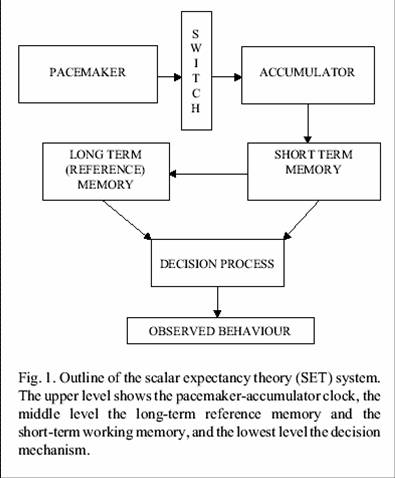
Introduction to pacemaker-accumulator mental time-keeping model

I previously made a couple of tease posts re: the predominant theoretical model of mental interval time-keeping (viz., the pacemaker-accumulator model). It is now time to "buck up" and provide my brief overview. Above is the best figure I've found to date (click here to see the original source article).

Human behavior based on the perception and timing in the range of seconds-to-minutes has traditionally been explained bythe pacemaker–accumulator model. The pacemaker-accumulator model (PAM), which is based on scalar expectancy or timing theory (Church, 1984; Gibbon et al., 1984; Meck, 1983), “is relatively straightforward, and provides powerful explanations of both behavioural and physiological data” (Buhusi & Meck, 2005; p. 755).

Briefly, the PAM model implicates the processing of temporal information via three synchronized modular information processing systems (see Buhusi & Mech, 2005.) The “clock” system consists of a dopaminergic pacemaker that regularly generates or emits neural ticks or pulses that are transferred (via a “gaiting” switch) to the accumulator, which accumulates ticks/pulses (neural counting) that correspond to a specific time interval. The raw representation of the stimulus duration in the accumulator is then transferred to working memory, a component of the PAM “memory” system. The contents of working memory are then compared against a “reference standard” in the long-term (reference) memory, the second component of the PAM memory system. Finally, the “decision” level of the PAM is conceptualized to consist of a comparator that determines an appropriate response based on a decision rule which involves a comparison between the interval duration value present in working memory and the corresponding duration value in reference memory. In other words, a comparison is made between the contents of reference memory (the standard) and working memory (viz., are they “close?”).

Considerable research evidence suggests that the PAM could be conceptualized as domain-general master internal clock central to many complex human behaviors (see Buhusi & Meck, 2005 and Lewis & Miall, 2006). Mental interval time-keeping and temporal processing research has suggested that a higher mental clock rate enables individuals to perform specific sequences of mental operations faster and reduces the probability of occurrence of interfering incidents (i.e., less disinhibition), two conditions that produce superior performance on cognitive tasks as well as more efficient basic information processing skills (Rammsayer & Brandler, in press).


Technorati Tags: , , , , , , , , , , , , , , , ,,

Wednesday, October 18, 2006

Book review of Jensen's "Clocking the Mind"

Since posting information about Aruthur Jensen's new book (Clocking the Mind: Mental Chronometery of Individual Differences) yesterday, I did some sleuthing via the intelligence grapeview. I'm pleased to report, that a credible source (I've always wanted to say that....I love politics) indicates that a book review (by a top notch scholar in the field of intelligence) is in the works for the journal Intelligence. When I know...you shall know. I will post information as soon as I see it.

Technorati Tags: , , , , , , , , , , , , , , , , , , , , ,


powered by performancing firefox

Tuesday, October 17, 2006

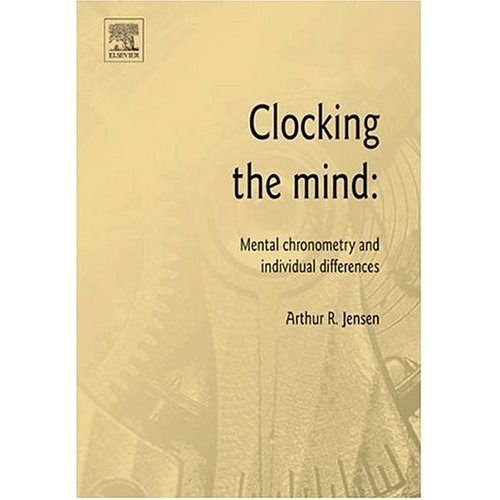
Arthur Jensen's "Clocking the mind" book


Thanks to an annonymous commenter for reminding me of the publication of Arthur Jensen's new book: Clocking the Mind: Mental Chronometry and Individual Differences.

As mentioned in a prior post (click here), Jensen is "the" name associated with the use of reaction time measures in the search for the essence of g (general intelligence). Although my prior post was in reference to an "in press" article that suggested that measures of temporal processing (vs. reaction time) may represent a temporal g ability that may be equal to or better than Jensen's reaction time paradigm, there is little doubt that Jensen's treatise will be relevant to understanding mental or interval time keeping. I'm anxious to see if Jensen draws any links to temporal processing and elementary timing tasks.

I placed my order for the book this evening. I also conducted a search for any professional reviews of the book, but could find none. If any readers become aware of any professional reviews of this book, please notify me.

Below is the description for the book provided by the publisher (I lifted this from Amazon.com)

Mental Chronometry (MC) comprises a variety of techniques for measuring the speed with which the brain processes information.

First developed in mid-1800, MC was subsequently eclipsed by more complex and practically useful types of psychometric tests stemming from Alfred Binet. This class of mental tests, however, has no true metric relating the test scores to any specific properties of the brain per se. The scores merely represent an ordinal scale, only ranking individuals according to their overall performance on a variety of complex mental tasks. The resulting scores represent no more than ranks rather than being a true metrical scale of any specific dimension of brain function. Such an ordinal scale, which merely ranks individuals in some defined population, possesses no true scale properties, possessing neither a true zero or equal intervals throughout the scale. This deficiency obstructs the development of a true natural science of mental ability. The present burgeoning interest in understanding individual differences in mental abilities in terms of the natural sciences, biology and the brain sciences in particular, demands direct measures that functionally link brain and behavior. One such natural ratio scale is time itself - the time it takes the brain to perform some elementary cognitive task, measured in milliseconds.

After more than 25 years researching MC, Jensen here presents results on an absolute scale showing times for intake of visual and auditory information, for accessing short-term and long-term memory, and other cognitive skills, as a function of age, at yearly intervals from 3 to 80 years. The possible uses of MC in neurological diagnosis and the monitoring of drug effects on cognition, the chronometric study of special time-sensitive talents such as musical performance, and presents a theory of general intelligence, or g, as a function of the rate of oscillation of neural action potentials as measured by chronometric methods. Finally, Jensen urges the world-wide standardization of chronometric methods as necessary for advancing MC as a crucial branch of biopsychological science.

*Provides a different scale to report Mental Chronometry (MC) findings
*Argues for the global adoption of an absolute scale as opposed to the traditional ordinal scale
*An important contribution to MC researchers and psychologists and neuroscientists


Technorati Tags: , , , , , , , , , , , , , , , , , , , , ,

powered by performancing firefox

Monday, October 16, 2006

Temporal g: General intelligence (g) = internal mental time keeper?

Check out a rather lenghty post I made at IQs Corner re: a recent study suggesting that temporal processing (a master internal interval timing clock) may be a major explanatory basis for the concept of g (general intelligence). It was this post that got me started on the idea of a separate blog devoted to brain-based mental time-keeping.

Technorati Tags: , , , , , , , , , , , , , , , ,

powered by performancing firefox