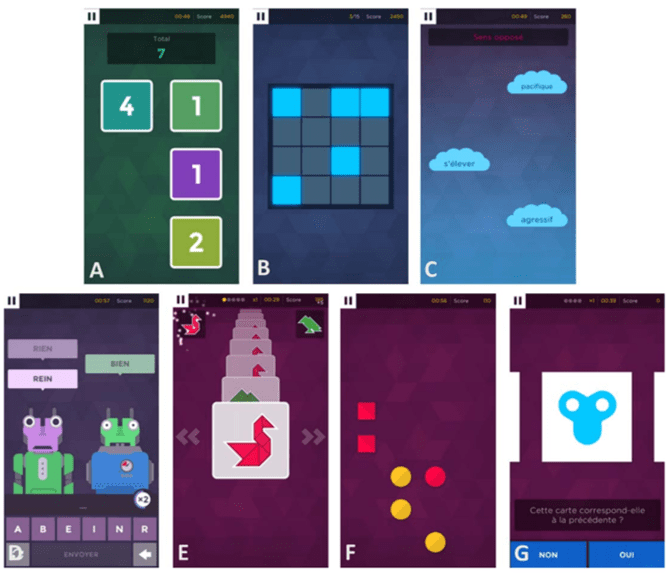
(SAN FRANCISCO) — The National Cancer Institute (NCI) of the US National Institutes of Health has designated BrainHQ online brain exercises, made by Posit Science, as a part of its "Research-Tested Intervention Programs" (RTIPs). BrainHQ is now included in the NCI database of evidence-based cancer interventions and program materials for program planners and public health practitioners.
The RTIPs program was set up by NCI to more rapidly move new science into "programs for people." It is a searchable database to help practitioners and program planners find evidence-based interventions that have sufficient relevance to be considered for use in real-world settings.
BrainHQ was selected for inclusion into the RTIPs program because it was tested in research studies, produced positive behavioral and psychosocial findings in cancer survivors, and study results were published in peer-reviewed medical journals. These findings were independently reviewed and scored by NCI and its partners as part of the process by which BrainHQ was included in the RTIPs program.
In selecting BrainHQ for RTIPs, NCI looked at published studies on the use of BrainHQ to address common complaints of cognitive impairment associated with cancer and its treatment. These cognitive impairments are often referred to as "cancer-induced cognitive impairment" or, more colloquially, as "chemobrain." Up to 90 percent of cancer survivors report cognitive issues from cancer or its treatment. There is no widely-accepted treatment for chemobrain.
NCI reviewed an 82-person randomized controlled trial conducted at the University of Indiana, which found that those who used a set of visual processing exercises now found in BrainHQ showed improvements, as compared to the control group, in objective measures of processing speed and verbal memory, as well as on standard measures of perceived cognitive functioning, symptom distress (anxiety, mood, fatigue), and quality of life. NCI also took note of a 242-person pragmatic study led by researchers at the University of Sydney in Australia, which found improvements compared to the control group in self-reported cognitive symptoms, symptom distress, and quality of life.
"We are honored that BrainHQ has been selected by the National Cancer Institute for inclusion in the Research-Tested Intervention Programs," said Dr. Henry Mahncke, CEO of Posit Science. "It is our mission to get scientific breakthroughs like brain-plasticity-based training out of the research lab and into the hands of people it can help. That crucially depends on groups like NCI RTIPs to qualitatively evaluate the level of evidence in new scientific fields, so that program planners and public health practitioners can deliver services that improve people's lives. "
There are now more than 100 peer-reviewed medical and science journal articles on the benefits of Posit Science exercises and assessments, across varied populations. BrainHQ exercises have been shown to improve standard measures of cognition (speed, attention, memory), quality of life (mood, confidence, health-related quality of life) and real-world activities (gait, balance, driving) in healthy adults.
About Posit Science Posit Science is the leading provider of clinically proven brain fitness training. Its exercises, available online at www.BrainHQ.com, have been shown to significantly improve brain speed, attention, memory and numerous standard measures of quality of life in multiple studies published in more than 60 peer-reviewed articles in leading science and medical journals. Three public television documentaries as well as numerous stories on news programs, in national magazines, and in major newspapers have featured Posit Science's work. The company's science team is led by renowned neuroscientist Michael Merzenich, PhD.
Levels of #intelligence research and explanation. Part of my #CHC theory update presentation at #FASP2018 this coming week. #brain #brainnetworks #neuroscience #psychometrics #IQ
*********************************************
Kevin McGrew, PhD
Educational Psychologist
Director
Institute for Applied Psychometrics
www.themindhum.com *********************************************
Timing Training in Female Soccer Players: Effects on Skilled Movement Performance and Brain Responses. Frontiers in Human Neuroscience. Article link.
Marius Sommer, Charlotte K. Häger, Carl Johan Boraxbekk and Louise Rönnqvist
Abstract
Although trainers and athletes consider “good timing skills” critical for optimal sport performance, little is known in regard to how sport-specific skills may benefit from timing training. Accordingly, this study investigated the effects of timing training on soccer skill performance and the associated changes in functional brain response in elite- and sub-elite female soccer players. Twenty-five players (mean age 19.5 years; active in the highest or second highest divisions in Sweden), were randomly assigned to either an experimental- or a control group. The experimental group (n = 12) was subjected to a 4-week program (12 sessions) of synchronized metronome training (SMT). We evaluated effects on accuracy and variability in a soccer cross-pass task. The associated brain response was captured by functional magnetic resonance imaging (fMRI) while watching videos with soccer-specific actions. SMT improved soccer cross-pass performance, with a significant increase in outcome accuracy, combined with a decrease in outcome variability. SMT further induced changes in the underlying brain response associated with observing a highly familiar soccer-specific action, denoted as decreased activation in the cerebellum post SMT. Finally, decreased cerebellar activation was associated with improved cross-pass performance and sensorimotor synchronization. These findings suggest a more efficient neural recruitment during action observation after SMT. To our knowledge, this is the first controlled study providing behavioral and neurophysiological evidence that timing training may positively influence soccer-skill, while strengthening the action-perception coupling via enhanced sensorimotor synchronization abilities, and thus influencing the underlying brain responses.
Conclusion
In summary, this is the first controlled study demonstrating that improved motor timing and multisensory integration, as an effect of SMT, also is associated with changes in functional brain response. The present study provides both behavioral and neurophysiological evidence that timing training positively influences soccer-skill, strengthens the action-perception coupling by means of enhanced sensorimotor synchronization abilities, and affect underlying brain responses. These findings are in accordance with the idea that SMT may result in increased brain communication efficiency and synchrony between brain regions (McGrew, 2013), which in the present study was evident by reduced activation within brain areas important for temporal planning, movement coordination and action recognition and understanding (cerebellum). Also, our results complement findings indicating that the cerebellum plays an important role in the action-perception coupling (Christensenetal.,2014),and confirm recent theories supporting a cognitive-perceptual role of the cerebellum (e.g., Roth et al., 2013).Probing the influence of timing training on the underlying brain activation during soccer specific action observation is an important approach as it provides a window into the brain plasticity associated with non-task specific (timing) training, and to the underlying brain activation of skilled performance. The present study suggests that the underlying brain activation during action observation, which is claimed to be important for action recognition and understanding (e.g., Rizzolatti and Craighero, 2004), may be influenced in other ways than through task-specific training (e.g., Calvo-Merino et al., 2005) or observational learning (e.g., Cross et al., 2013). Such knowledge of how SMT may alter brain activity within regions facilitating the action perception coupling is likely important for enhancing training techniques within sports, as well as for developing new rehabilitative techniques for many clinical populations.
I am pleased to see the Journal of Intelligence addressing the integration of non-cognitive variables (personality; self-beliefs; motivational constructs; often called the “no-mans land” between intelligence and personality— I believe this catchy phrase was first used by Stankov) with intellectual constructs to better understanding human performance. I have had a long-standing interest in such comprehensive models as reflected by my articulation of the Model of Academic Competence and Motivation (MACM) and repeated posting of “beyond IQ” information at my blogs.
Joel Schneider and I briefly touched in this topic in our soon to be published CHC intelligence theory update chapter. Below is the select text and some awesome figures crafted by Joel.
Our simplified conceptual structure of knowledge abilities is presented in Figure 3.10. At the center of overlapping knowledge domains is general knowledge—knowledge and skills considered important for any member of the population to know (e.g., literacy, numeracy, self-care, budgeting, civics, etiquette, and much more). The bulk of each knowledge domain is the province of specialists, but some portion is considered important for all members of society to know. Drawing inspiration from F. L. Schmidt (2011, 2014), we posit that interests and experience drive acquisition of domain-specific knowledge.
In Schmidt's model, individual differences in general knowledge are driven largely by individual differences in fluid intelligence and general interest in learning, also known as typical intellectual engagement (Goff & Ackerman, 1992). In contrast, individual differences in domain-specific knowledge are more driven by domain-specific in-terests, and also by the “tilt” of one's specific abilities (Coyle, Purcell, Snyder, & Richmond, 2014; Pässler, Beinicke, & Hell, 2015). In Figure 3.11, we present a simplified hypothetical synthesis of several ability models in which abilities, interests, and personality traits predict general and specific knowledge (Ackerman, 1996a, 1996b, 2000; Ackerman, Bowen, Beier, & Kanfer, 2001; Ackerman & Heggestad, 1997; Ackerman & Rolfhus, 1999; Fry & Hale, 1996; Goff & Ackerman, 1992; Kail, 2007; Kane et al., 2004; Rolfhus & Ackerman, 1999; Schmidt, 2011, 2014; Schneider et al., 2016; Schneider & Newman, 2015; Woodcock, 1993; Ziegler, Danay, Heene, Asendorpf, & Bühner, 2012).
Abstract: In the past few years numerous mobile games have been developed to train the brain. There is a lack of information about the relation between the scores obtained in these games and the cognitive abilities of the patients. The aim of this study was to determine whether or not mobile games can be used to assess cognitive abilities of elderly. Twenty healthy young adults, 29 old patients with cognitive impairments (Mini-Mental State Exam (MMSE) [20- 24]) and 27-aged controls participated in this study. Scores obtained in 7 mobile games were correlated with MMSE and the Addenbrooke's Cognitive Evaluation revised (ACE-R). Statistically significant differences were found for all games between patients with cognitive impairments and the aged controls. Correlations between the average scores of the games and the MMSE and ACE-R are significant (R = 0.72 [p < 0.001] and R = 0.81 [p < 0.001], respectively). Scores of cognitive mobile games could be used as an alternative to MMSE and ACE-R to evaluate cognitive function of aged people with and without cognitive impairment at least when MMSE is higher than 20/30.
The number of psychiatric diagnoses keep on growing, with perhaps ten times as many categories now as there were 50 years ago. This may in part reflect our growing knowledge, which is welcome. But the sheer density of diagnoses makes it difficult for researchers or clinicians to see the wood for the trees, and it encourages them to settle into silos. It would be advantageous for clinical research and practice if we could introduce some elegance to our understanding. A recent movement in psychology and psychiatry is seeking to do exactly this. It follows evidence that, in the words of US psychologists Robert Kruger and Nicholas Eaton in their 2015 review, "many mental disorders are manifestations of relatively few core underlying dimensions." In the latest foray from this movement, the Journal of Clinical Psychology has published a review outlining another potential core feature: the repetitive occurrence of negative thoughts.
The proliferation of psychiatric diagnoses was baked in from the beginning. Modern psychiatry sought to apply the burgeoning medical model to the mind, treating madness as illness. Physical illnesses are considered as discrete categories, even if they produce overlapping symptoms like a fever, because we can point to their distinct microbial origins.
This has influenced how we approach mental health, meaning someone struggling could be diagnosed with a phobia and also with an eating disorder and maybe separately with depression (and anxiety, and another eating disorder, and another phobia, and OCD…ad infinitum). We bracket these issues out as if they each originate from their own unique strain of mind bacteria. But mental disorders are rooted in dysfunctional mental processes, of which there are only so many. If we put aside the disease model and look for these processes, maybe we can get to a more solid and elegant foundation.
One example would be internalising-externalising. In internalising disorders such as depression, OCD, anxiety and bulimia, the individual tends to draw problems inwards to an inappropriate degree; issues are suppressed or privately managed using ineffective or unhealthy strategies. Meanwhile, externalising disorders like pyromania, kleptomania, and conditions like oppositional defiant disorder or conduct disorder, all involve manifesting problematic thoughts or emotions by projecting them onto the world.
According Kruger and Eaton's landmark review, these aren't just convenient labels: they may actually be more informative than the specific diagnoses. For instance, suicide risk may be better predicted by internalising in all its forms than a specific diagnosis like depression. Similarly, externalising behaviour of any kind is a strong predictor of other forms of externalising, suggesting that it might sometimes be useful to think of the problem as externalising, which can manifest in different ways depending on contextual factors.
Still, this division is too simple to explain everything about mental health. But in interaction with some other features, perhaps we can start to arrive at a complete model that cuts across diagnostic categories while also capturing the richness of psychiatric conditions. What other relevant factors are there? We recently covered work that suggested another potential trans-diagnostic structure: meta-cognition, the ability to judge your cognitive ability. People who were more anxious or depressed showed more accuracy, but less confidence, in how they judged their performance on a mental task, whereas those who tended towards compulsive behaviour (such as those with schizophrenia or OCD) showed overconfidence and did less well. In our piece we described how this pattern can account for patterns of behaviour found in the real world, such as pessimism and jumping to conclusions, respectively.
Now in the most recent example, Deanna Kaplan and her team at the University of Arizona suggest another trans-diagnostic feature: "maladaptive repetitive thought". This is found across many mental health disorders, typically accompanied by a sense that the thoughts are uncontrollable, a negative flavour, and a fixation onseeking rather than solving problems. Consider the ruminative thoughts that characterise depression, the worries that surge up in anxiety, and the obsessive thoughts that drive OCD. Kaplan's team suggest that these different manifestations should be thought of as variations on a key theme, often differing simply in whether the thoughts are focused on the past, present or future.
The researchers note that their model helped them to draw connections to other related phenomena such as the problematic grief phenomenon of yearning, which pulls you into the past towards a desire that cannot be satisfied. They also see parallels in somatic hypervigilance, the constant monitoring of bodily sensations for any cause for alarm. Again, the same features come up: negative valence, uncontrollability, and seeking of problems, in this case in the present moment.
It's not news that unwelcome thoughts are a frequent feature of poor mental health. But as with the internalising and externalising dimensions, it's possible that grouping mental health problems that share repetitive thought processes could offer fresh way of looking at the root causes of people's difficulties. It could be that the core problems driving all psychological disorders are countable on our fingers – if so, and if we can identity these core processes, then it will be easier to understand how they develop, and to apply advances from one area of treatment to another, as well as to see when doing so would be ill-advised.
For example, consider how the three features of internalising/externalising, meta-cognitive judgment and repetitive thought processes could be used to organise our understanding of the recently proposed diagnostic category of maladaptive daydreaming, whereby people are compulsively drawn to their daydreams at the cost of their psychological health. This certainly seems to involve internalising, and could involve overconfident misjudgment of whether the daydreaming is beneficial. And what is a daydream if not an extended, imagistic form of thought (much like a yearning)?
I believe we may be on the verge of a real advance in psychiatry, akin to the turn from individual symptoms to mental syndromes we made one hundred years ago. By looking past surface issues and gripping the fundamental mental processes that drive confusion and distress, we might be better placed to remedy them.
Elizabeth Huber, Patrick M. Donnelly, Ariel Rokem & Jason D. Yeatman
ABSTRACT
White matter tissue properties are known to correlate with performance across domains ranging from reading to math, to executive function. Here, we use a longitudinal intervention design to examine experience-dependent growth in reading skills and white matter in grade school-aged, struggling readers. Diffusion MRI data were collected at regular intervals during an 8-week, intensive reading intervention. These measurements reveal large-scale changes throughout a collection of white matter tracts, in concert with growth in reading skill. Additionally, we identify tracts whose properties predict reading skill but remain fixed throughout the intervention, suggesting that some anatomical properties stably predict the ease with which a child learns to read, while others dynamically reflect the effects of experience. These results underscore the importance of considering recent experience when interpreting cross-sectional anatomy–behavior correlations. Widespread changes throughout the white matter may be a hallmark of rapid plasticity associated with an intensive learning experience.
Very interesting. The arcuate fasciculus tracts have also been implicated in higher order thinking (Gf) such as in the P-FIT model of intelligence. Also see white paper that implicates the AF in temporal processing “brain clock” timing interventions