
Brain Training - The "Controversy"
From Twitter, a Flipboard magazine by Elsevier Neuro
The Meriam-Webster defines training as: "the skill, knowledge, or experience acquired by one that trains." In combination with the word "brain" it becomes a…

Understanding the human brain clock & related neuroscience
From Twitter, a Flipboard magazine by Elsevier Neuro
The Meriam-Webster defines training as: "the skill, knowledge, or experience acquired by one that trains." In combination with the word "brain" it becomes a…

Severe concussions where a person is visibly shaken or knocked unconscious are obviously cause for concern, but milder ones that go undetected can…


For argument's sake, I'll accept that perhaps the universe did not exist before the Big Bang — but it exploded in something, right? What was that? What was there before the beginning? Proposing such questions, the astrophysicist Stephen Hawking has said, is like standing at the South Pole and asking which way is south: "Earlier times simply would not be defined."Nearly a century after Borges's exquisite refutation of time in language — "Time is a river which sweeps me along, but I am the river; it is a tiger which destroys me, but I am the tiger; it is a fire which consumes me, but I am the fire." — Burdick adds with an eye to the inherent limitations of our metaphors:
Perhaps Hawking is trying to be reassuring. What he seems to mean is that human language has a limit. We (or at least the rest of us) reach this boundary whenever we ponder the cosmic. We imagine by analogy and metaphor: that strange and vast thing is like this smaller, more familiar thing. The universe is a cathedral, a clockworks, an egg. But the parallels ultimately diverge; only an egg is an egg. Such analogies appeal precisely because they are tangible elements of the universe. As terms, they are self-contained — but they cannot contain the container that holds them. So it is with time. Whenever we talk about it, we do so in terms of something lesser. We find or lose time, like a set of keys; we save and spend it, like money. Time creeps, crawls, flies, flees, flows, and stands still; it is abundant or scarce; it weighs on us with palpable heft.
[…]
Yet whatever one calls it, we share a rough idea of what's meant: a lasting sense of one's self moving in a sea of selves, dependent yet alone; a sense, or perhaps a deep and common wish, that I somehow belongs to we, and that this we belongs to something even larger and less comprehensible; and the recurring thought, so easy to brush aside in the daily effort to cross the street safely and get through one's to-do list, much less to confront the world's true crises, that my time, our time, matters precisely because it ends.

Time is a social phenomenon. This property is not incidental to time; it is its essence. Time, equally in single cells as in their human conglomerates, is the engine of interaction. A single clock works only as long as it refers, sooner or later, obviously or not, to the other clocks around it. One can rage about it, and we do. But without a clock and the dais of time, we each rage in silence, alone.

The key ingredient seems to be a physiological response called arousal, which isn't what you might think. In experimental psychology, "arousal" refers to the degree to which the body is preparing itself to act in some manner. It's measured through heart rate and the skin's electrical conductivity; sometimes subjects are asked to rate their own arousal in comparison to images of faces or puppet figures. Arousal can be thought of as the physiological expression of one's emotions or, perhaps, as a precursor of physical action; in practice there may be little difference. By standard measures, anger is the most arousing emotion, for viewer and angry person alike, followed by fear, then happiness, then sadness. Arousal is thought to accelerate the pacemaker, causing more ticks than usual to accumulate in a given interval, thereby making emotionally laden images seem to last longer than others of equal duration… Physiologists and psychologists think of arousal as a primed physical state — not moving but poised to move. When we see movement, even implied movement in a static image, the thinking goes, we enact that movement internally. In a sense, arousal is a measure of your ability to put yourself in another person's shoes.

A slower clock ticks less often in a given interval of time; fewer ticks accumulate, so the interval is judged to be briefer than it actually is. Perceiving or remembering an elderly person induces the viewer to reenact, or simulate, their bodily states, namely their slow movement.A book, Rebecca Solnit memorably wrote, is "a heart that only beats in the chest of another." In a very real sense, we are each a temporally open book and empathy a clock that only ticks in the consciousness of another. Burdick writes:
Our shared temporal distortions can be thought of as manifestations of empathy; after all, to embody another's time is to place oneself in his or her skin. We imitate each other's gestures and emotions — but we're more likely to do so, studies find, with people with whom we identify or whose company we would like to share.Perhaps Borges was right, after all, that time is the substance we are made of.
[…]
Life dictates that we possess some sort of internal mechanism to keep time and monitor brief durations — yet the one we carry around can be thrown off course by the least emotional breeze. What's the point of owning such a fallible clock? … Maybe there's another way to think about it, Droit-Volet suggests. It's not that our clock doesn't run well; on the contrary, it's superb at adapting to the ever-changing social and emotional environment that we navigate every day. The time that I perceive in social settings isn't solely mine, nor is there just one cast to it, which is part of what gives our social interactions their shading. "There is thus no unique, homogeneous time but instead multiple experiences of time," Droit-Volet writes in one paper. "Our temporal distortions directly reflect the way our brain and body adapt to these multiple times." She quotes the philosopher Henri Bergson: "On doit mettre de côte le temps unique, seuls comptent les temps multiples, ceux de l'expérience." We must put aside the idea of a single time, all that counts are the multiple times that make up experience.
Our slightest social exchanges — our glances, our smiles and frowns — gain potency from our ability to synchronize them among ourselves, Droit-Volet notes. We bend time to make time with one another, and the many temporal distortions we experience are indicators of empathy; the better able I am to envisage myself in your body and your state of mind, and you in mine, the better we can each recognize a threat, an ally, a friend, or someone in need. But empathy is a fairly sophisticated trait, a mark of emotional adulthood; it takes learning and time. As children grow and develop empathy, they gain a better sense of how to navigate the social world. Put another way, it may be that a critical aspect of growing up is learning how to bend our time in step with others. We may be born alone, but childhood ends with a synchrony of clocks, as we lend ourselves fully to the contagion of time.

From Brain, a Flipboard magazine by luke dutcher
It takes a whole lotta gray matter. Your mind is constantly counting: the rhythm of your speech, the minutes until your next snack, the awful pause between text…
1 What Is Intelligence? Probe the nature of intelligence by looking first at the phenomenon of savants—individuals who excel at a narrow mental skill. Does this qualify as…
Distant memories: Why the default mode network is important during states of internal focus

Find stories to share everyday with Juice a Paper.li app for iPhone.
Download it today!


Neuroscience used to be the monopoly of a few elite universities located in a handful…
Regularly playing action video games reduces the grey matter in a person's…
Interesting story, thought you might like it.
Cognitive Hearing Aid Filters Out the Noise
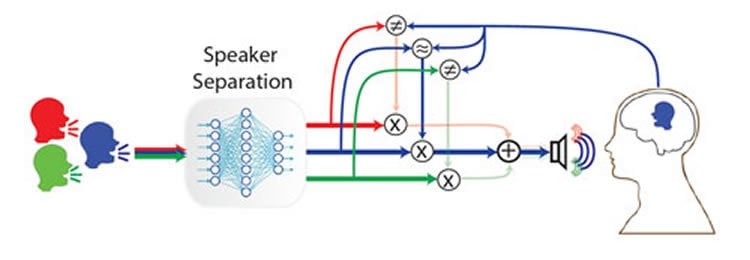
Find stories to share everyday with Juice a Paper.li app for iPhone.
Download it today!

By Josh Jones via The Mind Unleashed(Open Culture) An old musician's joke goes "there are three kinds of…


A good night's sleep refreshes body and mind, but a poor night's sleep can do just the opposite. A study from…
RDoC is a research framework for new ways of studying mental disorders. It integrates many levels of information (from genomics to self-report) to better understand…

2017 Jul 3. pii: S1053-8119(17)30569-4. doi: 10.1016/j.neuroimage.2017.07.001. [Epub ahead of print] 1Department of…

From BBC News, a Flipboard magazine by BBC News
Fergus Walsh Medical correspondent The world's most detailed scan of the brain's internal wiring has been produced by scientists at Cardiff University. The MRI…

A new brain training game developed by researchers at the University of Cambridge could help improve the memory of patients in the very…
From New York Magazine, a Flipboard magazine by New York Magazine
"Time" is the most common noun in the English language, Dean Buonomano tells us on the first page of his new book, Your Brain Is a Time Machine: The Neuroscience and…


Abstract Introduction This study aims to identify novel quantitative EEG measures associated with mindfulness meditation. As there is…
Material below summarizes the article, Longitudinal Changes in Component Processes of Working…


