Showing posts with label neurofeedback. Show all posts

Saturday, October 06, 2007

Geekipedia @ Wired Magazine


[Double click on image to enlarge]

I'm just returning from a trip to Calgary, Canada. Prior to jumping on the plane I picked up a copy of Wired Magazine. I found a very cool extractable insert called Geekipedia. I must be a "geek" as I enjoyed reading the alphabetically listed definitions and explanations of important people, places, ideas and trends, primarily related to the internet and technology. I'm going to add this to my RSS feeds to keep up on new additions.

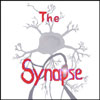
I particularly liked the visual-graphic for "neurologism"


Technorati Tags: , , , , , , , ,

Powered by ScribeFire.

Thursday, July 12, 2007

Stroke patients and metronome training

I just ran across an article (actually based on an email tip via the mental timing grapevine) for a 2002 article by Thaut et al. in Neuropsychologia that supports the use of synchronized metronome tapping (SMT) methods to improve motor coordination in patients with strokes.

In the article, the authors goal was to "investigate the effect of rhythm on the control of paretic arm movements in stroke patients." The basis for this intervention was prior research that had suggested that:
  • "a rhythmic model of rehabilitative motor training, has shown significant improvements in gait function of stroke patients. In this model, rhythm functions as a sensory cue to induce temporal stability and enhance the temporal organization of motor control in the nervous system by translating the temporal structure of movement patterns into temporally isomorphic auditory rhythmic patterns to entrain the movement in question. Similar models have been successfully used in high-performance motor skill learning in sports and music."
In a sample of 21 hemispheric stroke patients, the researchers found that:
  • "the observed changes in timing and trajectory control strongly suggest that the structured time information in auditory rhythm added significant kinematic stability to the patient’s paretic arm reaching motions. These changes were not present during the non-rhythmic condition...Our data suggest, therefore, that auditory rhythm may offer an essential component of enhanced sensorimotor control to make hemiparetic arm training more effective."
The results of this study provide indirect support for the use of the Interactive Metronome SMT-based program in stroke patients with motor control impairment. (click here for other IM-related prior posts on this blog). Of course, all of this makes sense in the context of the extant research literature on temporal processing and the IQ Brain Clock (click here to enter the wonderful world of the IQ Brain Clock EWOK)


Technorati Tags: , , , , , , , , , , ,

Powered by ScribeFire.

Friday, May 25, 2007

Wearable/portable brain scanner - put on my XMAS list

Thanks to Positive Technology Journal for the FYI post re: the trial development of a portable brain scanner that would allow people to keep tabs on their mental activity throughout the day. I'm not sure I want to know what my brain is doing all day long....but....heck ....it could fun and may have potential in the growing brain fitness movement.

Notice to family/friends......put this on my XMAS wish list

Technorati Tags: , , , , , ,

Powered by ScribeFire.

Wednesday, January 03, 2007

Interactive Metronome @ McNatt Learning Center

As posted previously, my initial interest in mental/interval time-keeping surfaced when I was asked to serve as an external evaluation consultant to an educational application of a synchronized metronome tapping intervention (Interactive Metronome; IM) to improve school achievement.

I've now become aware of a learning corporation (McNatt Learning Center, Inc) which has been using the IM method with a variety of clinical disorders. The McNatt Learning Center has now posted a relatively lengthy (and informative) set of information regarding IM at the following link. Of particular interest to me is the reported n=1 clinical case study application of IM to Tourette's syndrome.

Readers interested in the mental/interval time-keeping based application of the IM procedure are strongly urged to check out these very nice IM set of material at McNatt Learning.

Technorati Tags: , , , , , , , , , , , , ,

powered by performancing firefox

Tuesday, November 21, 2006

ADHD brain self-regulation treatment

Thanks to Positive Technology Journal for the tip regarding a new study in the journal Pediatrics that investigated the efficacy of self-regulation treatment (of slow cortical potentials via feedback) for ADHD. Very interesting use of neurotechnology (neurofeedback) for ADHD. PTJ provides a nice summary, so no sense repeating it hear. My contribution is to make a pdf copy of the article available for viewing.