Friday, March 02, 2018

BB (blatant brag): McGrew CHC 2009 article in Intelligence #1 (2008-2015) and top #10 all time


This was a pleasant surprise. I knew my 2009 Intelligence article was cited frequently but I never knew it was number one from 2008-2015 and it made the top 10 all time list for the journal Intelligence. I believe this is a reflection of the impact the CHC taxonomy has had. This should make my mom proud. Here is a link to the original article.

Bibliometric analysis across eight years 2008–2015 of Intelligence articles: An updating of Wicherts (2009). Article link.

Bryan J. Pesta

Abstract

I update and expand upon Wicherts' (2009) editorial in Intelligence. He reported citation counts of papers pub-lished in this journal from 1977 to 2007. All these papers are now at least a decade old, and many more new articles have been published since Wichert's analysis. An updated study is needed to help (1) quantify the journal's more recent impact on the scientific study of intelligence, and (2) alert researchers and educators to highly-cited articles; especially newer ones. Thus, I conducted a bibliometric analysis of all articles published here from 2008 to 2015. Data sources included both the Web of Science (WOS), and Google Scholar (GS). The eight-year set comprised 619 articles, published by 1897 authors. The average article had 17.0 (WOS), and 32.9 (GS) citations overall (2.75, and 5.33 citations per year, respectively). These metrics compare favorably with those from other psychology journals. In addition, a list of the most prolific authors is provided. Also reported is a list showing many articles in this set with counts greater than one hundred, and an updated top 25 list for the history of this journal.


“Also noteworthy is that nine of the articles in the old list (not shown here) dropped off the new list. Of their replacements, only three of the nine were published within the last decade: Deary, Strand, Smith, and Fernandes (2007); McGrew (2009), and Strenze (2007). The McGrew (2009) paper is again notable. It is the only article in my newer set (2008–2015) to make the all-time list. The paper ranks ninth on the all-time list with 281 citations, just eight years after being published.”


More recent Google Scholar citation info indicates that the article is still going strong from 2016-2017.


Click on images to enlarge.


- Posted using BlogPress from my iPad

Monday, February 26, 2018

The 50 Most Influential Living Psychologists in the World

I guess I need to work harder.....jk 😀

The 50 Most Influential Living Psychologists in the World

The word "psychology" literally means the study of the soul (psukhÄ“, in Greek). As such, it is an academic discipline that is unique in the…

Read it on Flipboard

Read it on thebestschools.org


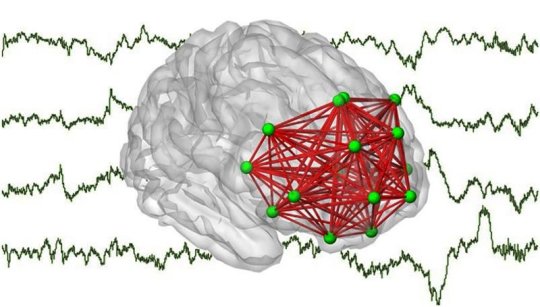
Preterm birth leaves its mark in the functional networks of the brain

Damage is in the most important brain network for higher cognition

Preterm birth leaves its mark in the functional networks of the brain

Researcher have demonstrated that premature birth has a significant and, at the same time, a very selective effect on the…

Read it on Flipboard

Read it on sciencedaily.com


Wednesday, February 21, 2018

Your ability to focus has probably peaked: Here’s how to stay sharp


Your ability to focus has probably peaked: Here's how to stay sharp

From Brain, a Flipboard magazine by Jordanna Manor

Having a hard time focusing lately? You're not alone. Research shows interruptions occur about every twelve minutes in the workplace…

Read it on Flipboard

Read it on theladders.com


******************************************************
Kevin McGrew, PhD
Educational Psychologist
Director, Institute for Applied Psychometrics
IAP
******************************************************

Tuesday, February 20, 2018

The Five Secrets of Brain Health


Dr. Lieff is an excellent thinker and writer worth following

The Five Secrets of Brain Health

The brain is a 3-pound organ in our body, which, like any other organ, can be healthy or unhealthy. Uniquely, the brain is intertwined with our mind, emotions,…

Read it on Flipboard

Read it on jonlieffmd.com


Sunday, February 18, 2018

BrainFacts2


BrainFacts2

From Twitter, a Flipboard magazine by BrainFacts.org

Thinking, Sensing & Behaving Diseases & Disorders BrainFacts/SfN • 4 min BrainFacts/SfN • 5 min Brain Anatomy & Function BrainFacts/SfN BrainFacts/SfN Neuroscience in Society

Read it on Flipboard

Read it on brainfacts.org


Sunday, February 11, 2018

Closing the achievement gap the intelligent way | THE Opinion

https://www.timeshighereducation.com/opinion/closing-the-achievement-gap-the-intelligent-way


******************************************************
Kevin McGrew, PhD
Educational Psychologist
Director, Institute for Applied Psychometrics
IAP
www.themindhub.com
******************************************************

Sunday, January 28, 2018

How does your brain follow music?


******************************************************
Kevin McGrew, PhD
Educational Psychologist
Director, Institute for Applied Psychometrics
IAP
www.themindhub.com
******************************************************

Time Cells Organize Memory


Time Cells Organize Memory

Yesterday, When I woke up I washed and dressed And while drinking coffee, The telephone rang, And you invited me to the meeting. Memories have specific sequences of events.…

Read it on Flipboard

Read it on jonlieffmd.com


Wednesday, January 24, 2018

Neuroscientists Finally Put The Dubious Claims of 'Phrenology' to The Test


Neuroscientists Finally Put The Dubious Claims of 'Phrenology' to The Test

From Neurociencia, a Flipboard magazine by igaea

Nobody really believes that the shape of our heads are a window into our personalities anymore. This idea, known as…

Read it on Flipboard

Read it on scienceaf.com


******************************************************
Kevin McGrew, PhD
Educational Psychologist
Director, Institute for Applied Psychometrics
IAP
******************************************************

Monday, January 22, 2018

Intelligence in the Brain: Conversation With Neuroscientist Rogier Kievit

Excellent thoughts from and excellent researcher interviewed by an excellent psychologist and thought leader.


Intelligence in the Brain: Conversation With Neuroscientist Rogier Kievit

Neuroscientist Rogier Kievit discusses the neuroscience of intelligence.

Read it on Flipboard

Read it on psychologytoday.com


Sunday, January 21, 2018

Creative people have better-connected brains, research finds

I have previously posted an FYI about this research.  This summary by Jon Lieff is excellent.


Creative people have better-connected brains, research finds

From Twitter, a Flipboard magazine by Jon Lieff MD

Seemingly countless self-help books and seminars tell you to tap into the right side of your brain to stimulate creativity. But forget the…

Read it on Flipboard

Read it on medicalxpress.com


Tuesday, January 16, 2018

Myelin Facilitation of Whole Brain Neuroplasticity

An excellent summary article

Myelin Facilitation of Whole Brain Neuroplasticity

Neuroplasticty is the way a brain makes lasting alterations of its own circuits when responding to experience. A vast array of mechanisms have been…

Read it on Flipboard

Read it on jonlieffmd.com


Creative thinkers' brains show signature pattern of neural connectivity, new study finds


Creative thinkers' brains show signature pattern of neural connectivity, new study finds

From Science and Health, a Flipboard magazine by IBTimes UK

In case of creative thinkers, researchers noted a better connection between 3 crucial parts of the brain.…

Read it on Flipboard

Read it on ibtimes.co.uk


Friday, January 05, 2018

Meta-analysis of action video game impact on perceptual, attentional, and cognitive skills.


Meta-analysis of action video game impact on perceptual, attentional, and cognitive skills.


Journal ArticleDatabase: PsycARTICLES


Bediou, Benoit Adams, Deanne M. Mayer, Richard E. Tipton, Elizabeth Green, C. Shawn Bavelier, Daphne

Citation

Bediou, B., Adams, D. M., Mayer, R. E., Tipton, E., Green, C. S., & Bavelier, D. (2018). Meta-analysis of action video game impact on perceptual, attentional, and cognitive skills. Psychological Bulletin, 144(1), 77-110. 
http://dx.doi.org/10.1037/bul0000130

Abstract

The ubiquity of video games in today's society has led to significant interest in their impact on the brain and behavior and in the possibility of harnessing games for good. The present meta-analyses focus on one specific game genre that has been of particular interest to the scientific community—action video games, and cover the period 2000–2015. To assess the long-lasting impact of action video game play on various domains of cognition, we first consider cross-sectional studies that inform us about the cognitive profile of habitual action video game players, and document a positive average effect of about half a standard deviation (g = 0.55). We then turn to long-term intervention studies that inform us about the possibility of causally inducing changes in cognition via playing action video games, and show a smaller average effect of a third of a standard deviation (g = 0.34). Because only intervention studies using other commercially available video game genres as controls were included, this latter result highlights the fact that not all games equally impact cognition. Moderator analyses indicated that action video game play robustly enhances the domains of top-down attention and spatial cognition, with encouraging signs for perception. Publication bias remains, however, a threat with average effects in the published literature estimated to be 30% larger than in the full literature. As a result, we encourage the field to conduct larger cohort studies and more intervention studies, especially those with more than 30 hours of training. (PsycINFO Database Record (c) 2018 APA, all rights reserved)


******************************************************
Kevin McGrew, PhD
Educational Psychologist
Director, Institute for Applied Psychometrics
IAP
******************************************************

Monday, January 01, 2018

The Neuroscience of Intelligence: An Interview with Richard Haier


The Neuroscience of Intelligence: An Interview with Richard Haier

Richard Haier is a Professor Emeritus at the University of California Irvine and is the author of the Neuroscience of Intelligence…

Read it on Flipboard

Read it on quillette.com


Thursday, December 28, 2017

Yes, the ADHD Brain Can Be Trained to Improve


Yes, the ADHD Brain Can Be Trained to Improve

From BiPolar, Depression & ADHD, a Flipboard magazine by Rob Waldrip

But can people with attention deficit hyperactivity disorder – often referred to as a brain-based disorder – also train their brain to improve? Every…

Read it on Flipboard

Read it on msn.com


******************************************************
Kevin McGrew, PhD
Educational Psychologist
Director, Institute for Applied Psychometrics
IAP
******************************************************

Wednesday, December 13, 2017

Action video games expand the brain's cognitive abilities


Action video games expand the brain's cognitive abilities

From Mind, a Flipboard magazine by Devon Briggs

The human brain is malleable – it learns and adapts. Numerous research studies have focused on the impact of action video games on the brain…

Read it on Flipboard

Read it on psypost.org


Talking to yourself? Here’s the science behind that little voice in your head


Talking to yourself? Here's the science behind that little voice in your head

The brain considers talking to ourselves in our heads to be very similar to speaking our thoughts out loud. And the…

Read it on Flipboard

Read it on irishexaminer.com


Friday, December 08, 2017

Scientists create atlas of developing human brain, the most complex human organ


Scientists create atlas of developing human brain, the most complex human organ

From Mind the Gap, a Flipboard magazine by Lawrence Villegas

Everybody likes travelling around the world but what if we tell you that now you can travel through human brains as…

Read it on Flipboard

Read it on indiatoday.intoday.in


Sunday, November 26, 2017

How do the brains of intelligent people work?


How do the brains of intelligent people work?

From NEUROSCIENCE, a Flipboard magazine by Glossex

People with a higher-than-average intelligence level have brains that are "wired" in a different way, researchers say. A new study suggests that…

Read it on Flipboard

Read it on medicalnewstoday.com


Wednesday, November 22, 2017

DARPA Is Spending $65 Million to Meld Mind and Machine


DARPA Is Spending $65 Million to Meld Mind and Machine

The U.S. defense agency that specializes in "out-there" science and technology endeavors is on a quest to bridge the gap between brain and…

Read it on Flipboard

Read it on blogs.discovermagazine.com


Fronto-parietal structural connectivity in childhood predicts development of functional connectivity and reasoning ability: a large-scale longitudinal investigation


Fronto-parietal structural connectivity in childhood predicts development of functional connectivity and reasoning ability: a large-scale longitudinal investigation

Read it on Flipboard

Read it on jneurosci.org


Friday, November 17, 2017

Can brain training reduce dementia risk? Despite new research, the jury is still out


Can brain training reduce dementia risk? Despite new research, the jury is still out

From The Guardian, a Flipboard magazine by The Guardian

There are good reasons to be cautious about a new study claiming computer-based training can reduce the risk of…

Read it on Flipboard

Read it on theguardian.com


Dementia breakthrough? Brain-training game 'significantly reduces risk'


Dementia breakthrough? Brain-training game 'significantly reduces risk'

From Brain, a Flipboard magazine by tommysclee

A recent study has been hailed as a "breakthrough" in dementia prevention, after finding that a brain-training exercise can…

Read it on Flipboard

Read it on medicalnewstoday.com


Wednesday, November 15, 2017

How emotions influence our internal clock


How emotions influence our internal clock

Human beings have an internal clock that enables the subconscious perception and estimation of time periods. A research team under Dr. Roland Thomaschke of…

Read it on Flipboard

Read it on medicalxpress.com


Monday, November 13, 2017

Memory complaints and cognitive decline: Data from the GuidAge study


Memory complaints and cognitive decline: Data from the GuidAge study

From THE SCIENCE OF My LIFE, a Flipboard magazine by duskdiver

A memory complaint, also called Subjective Cognitive Decline (SCD), is a subjective disorder that appears to be relatively common,…

Read it on Flipboard

Read it on eurekalert.org


******************************************************
Kevin McGrew, PhD
Educational Psychologist
Director, Institute for Applied Psychometrics
IAP
******************************************************

Neurons are seen exploding across the brain "like fireworks" in the most detailed map ever made


Neurons are seen exploding across the brain "like fireworks" in the most detailed map ever made

From Brain Philosophy, a Flipboard magazine by Sandra Clark

Beyond teaching us more about the structure of the brain, these maps could help unlock some of the…

Read it on Flipboard

Read it on alphr.com